Enterprises Need a New Agent Building Layer
Enterprises are stuck advancing their AI strategy choosing between overly simple workflow tools or complex frameworks for engineers. Our new Crew Studio fills the missing building layer: discover, build, own the code, and run it on centrally governed infrastructure.
 João (Joe) Moura
Enterprises Need a New Agent Building Layer
Enabling business and technical teams to build while giving platform teams the control to govern.
Most enterprises have a shipping problem.
The use cases for AI agents are there, the pressure from the top is there, and people can already point to the work they want agents to change: customer operations, sales, finance, product, support, compliance, internal tooling.
But the gap between the value people know AI can capture and the value they are actually capturing keeps getting wider.
Backlogs grow, the costs show up whether use cases ship or not and adoption stays below where it needs to be.
Most of that gap comes down to how companies build agentic systems.
The first win is usually not the hard part. A lot of teams are past the point of asking whether agents can do something useful. Some have built something, maybe even a few things, but then the second-order problems start.
Exceptions appear, the person who built the first version moves to another project, the agent needs a new integration, security wants an audit trail, Finance wants to know why this one process is suddenly expensive to run, you name it.
The problem is that your agent became “software”, and software as we have known, has needs, it consumes time. You took complexity at face value and assumed you needed that complexity to solve your complex problems, now it has become complex loops and graphs, something that only few understand and fewer can maintain.
Most enterprise agent initiatives fail to capture the full value they set out to, because they become the thing they were trying to fix, a bottleneck. Now they are the only team trying to build and maintain use cases left and right while a backlog grows, costs increase and credibility takes a hit.
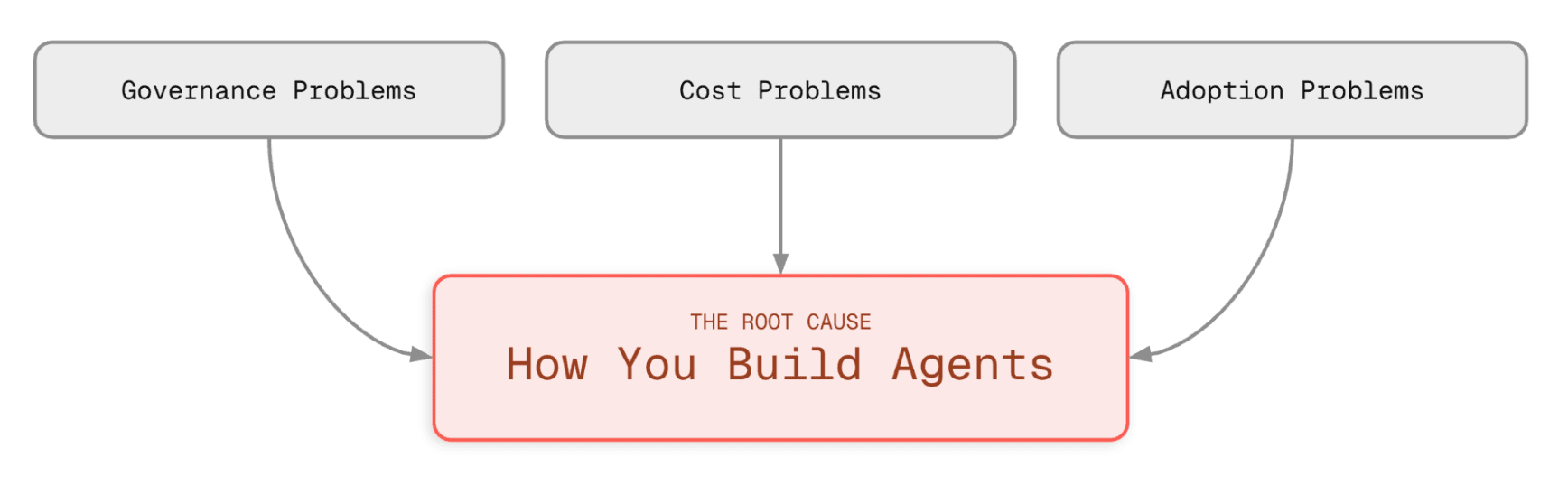
Don’t be a bottleneck, instead design your team to be a flywheel, but you will need a new building & runtime layer for that.
Enterprise agents need a new building layer.
Output work and systems work are different.
There is a place for ad hoc AI inside every enterprise: Build me a spreadsheet, draft this email, summarize this document. In those cases, you mostly care about the output, the process behind it is disposable.
The bulk of the enterprise value for agents is in a different kind of work though, “embedded work”, operational, always-on kind of work.
Work that runs every day, that touches customer records, internal systems, approvals, policies and data boundaries. Work where the agent is not just producing an artifact, but the process itself is as important as the output.
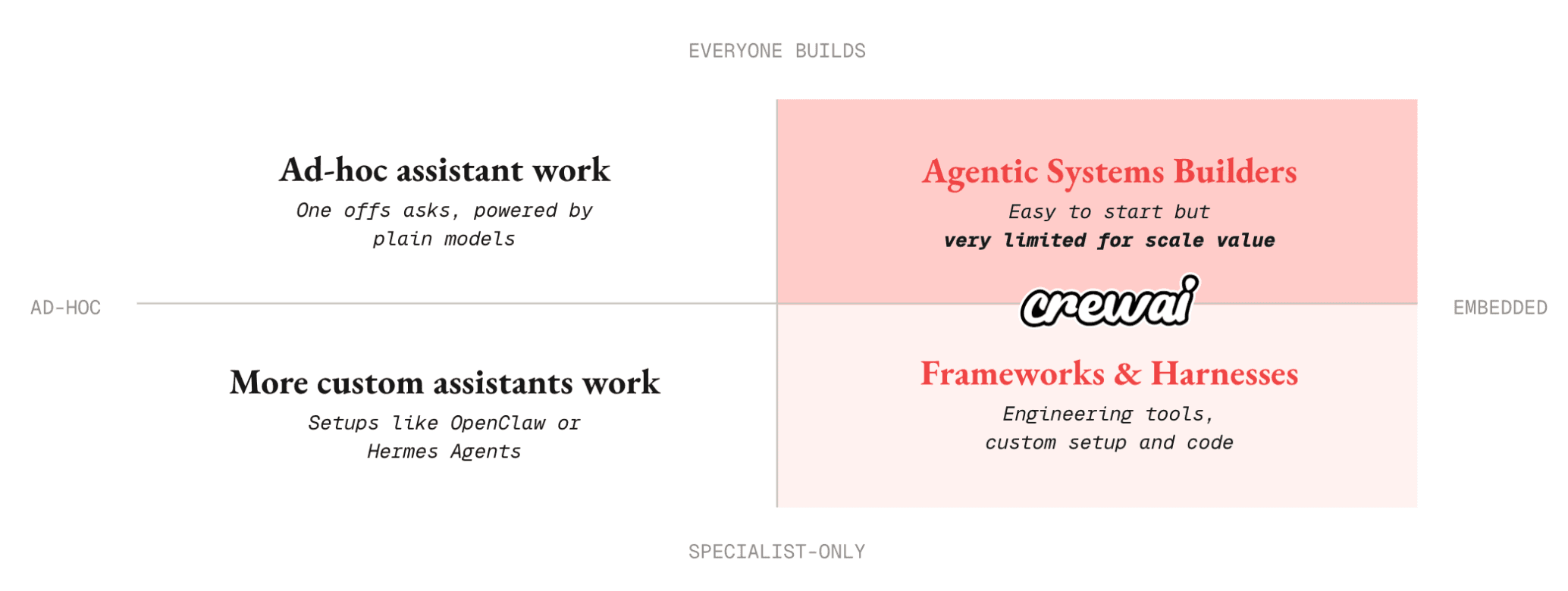
These systems are harder to build, but they are exactly where agents become the right abstraction. Not because everything should be autonomous. Because the work is dynamic enough that rigid automation breaks, and important enough that pure autonomy is not acceptable.
You need deterministic control where the process cannot drift, and agency where judgment, reasoning, or adaptation actually helps.
That is also where the current tooling model starts to break.
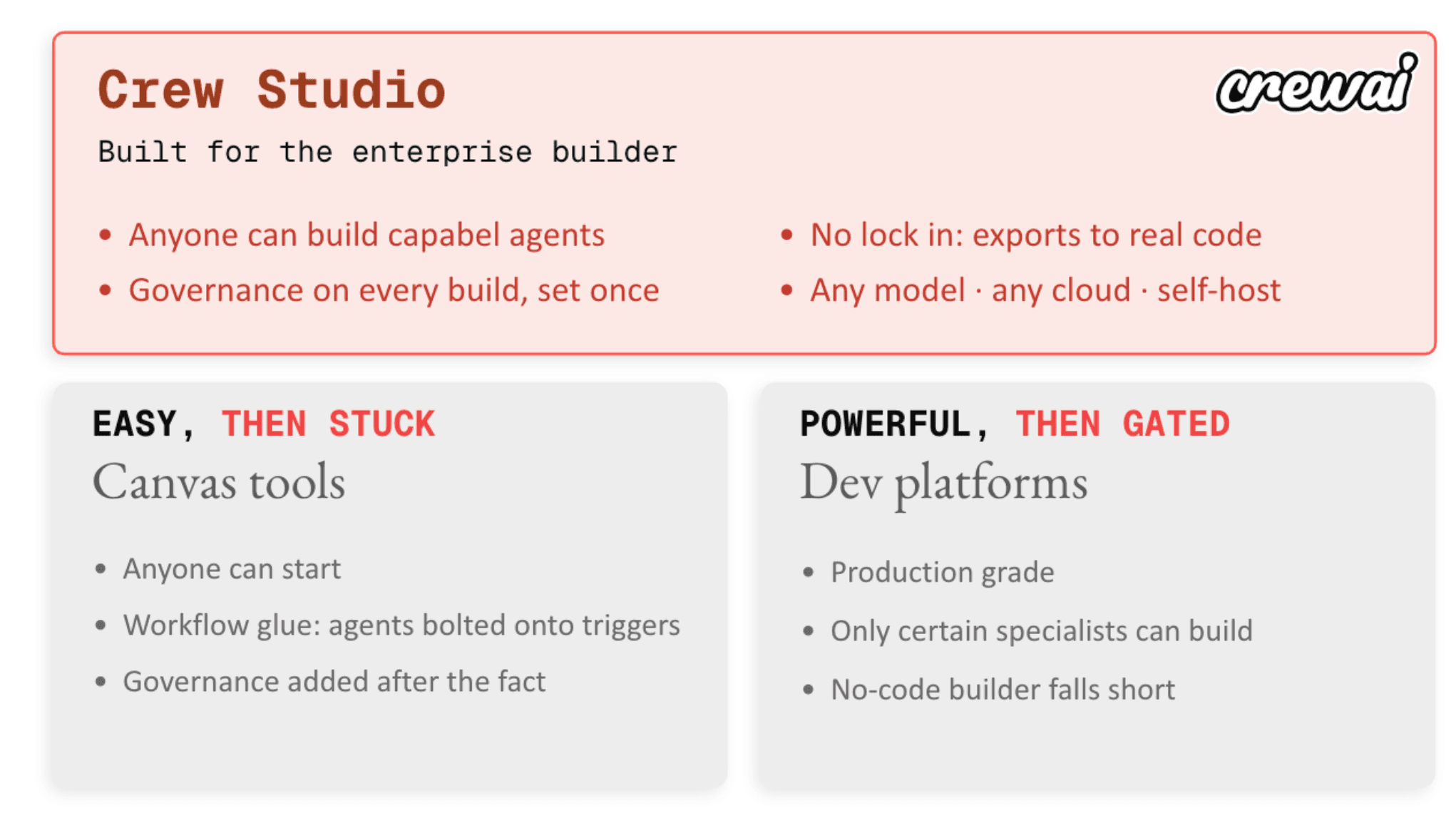
The first option is accessibility with a low ceiling.
Canvas tools and automation platforms made it easier for more people to build, which was a real improvement. But once the workflow becomes complex, governed, or mission-critical, the limits show up, and the agents become another box in a workflow that was never designed for agentic behavior.
The second option is power with too much gatekeeping.
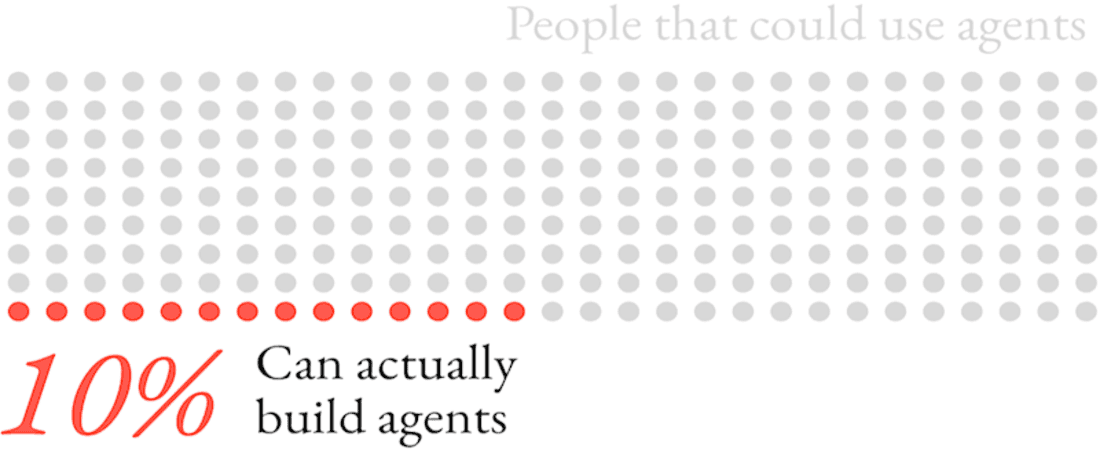
Frameworks, SDKs, and custom code offer a high ceiling for building powerful systems, but also come with a high barrier of entry (high floor). Because of this the people closest to the “job to be done” cannot use them directly, they are tools built exclusively for developers.
For companies going this route, the people close to the problem have to explain the workflow to someone else, that person translates it into architecture, code, permissions, integrations, tests, deployment, and maintenance.
That translation tax alone is bigger than most are willing to admit. It slows everything down, but worse, it loses fidelity. The person who understands the work is separated from the place where the work is being built.
For enterprise agents, this legacy tradeoff, where you either federate the building but it’s not transformational and falls short of the expected or you centralize the building but can’t scale and don’t capture full value is not good enough.
If the floor is too high, the business cannot participate due to the entry barrier.
If the ceiling is too low, the initiative never fulfills its full potential, and use cases are constrained to simpler ones.
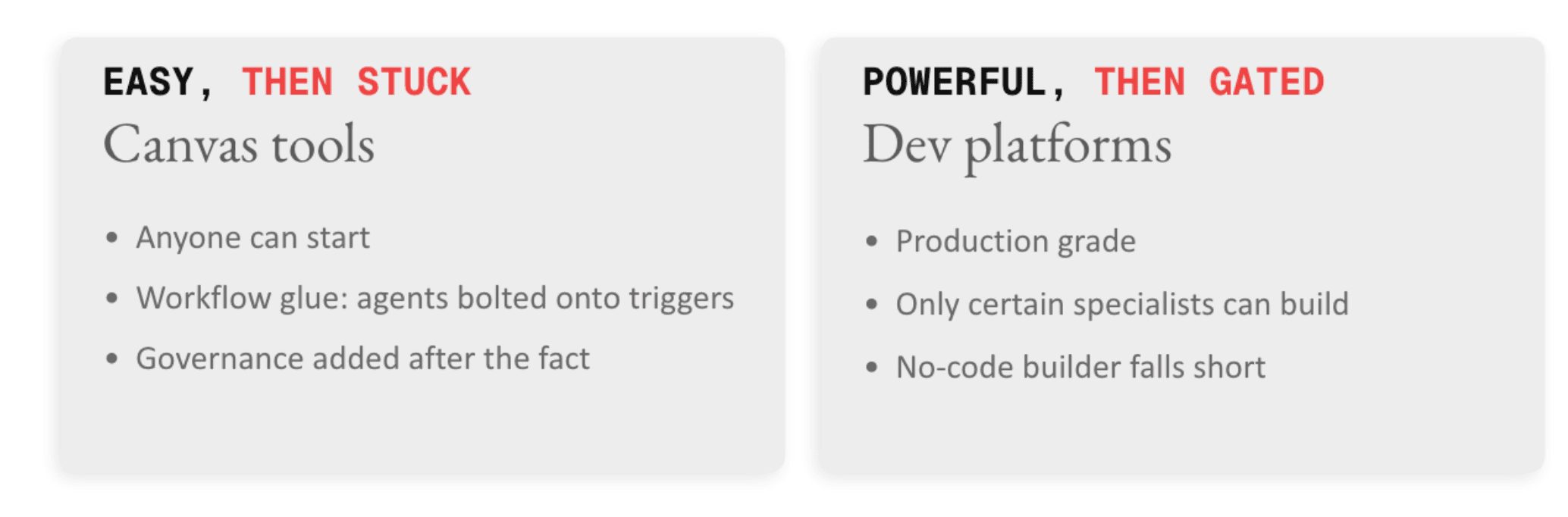
What most teams need is both a low floor and a high ceiling. The building has to move closer to the work, while the system being built needs to be extremely capable.
In order to capture full value, companies have to push more agent building toward the edges of the organization and federate a lot of the building.
Some will keep a centralized portion, some will fully certify builders across the company. The operating model will vary, but overall most of the innovators will go that direction.
The people closest to the workflow need to be better enabled to shape the system directly, while this cannot become a free-for-all.
Platform teams or IT organizations still need control. They need to decide which models are approved, which tools can be used, which data can be touched, how costs are tracked, how runs are audited, how approvals work, and where production systems deploy.
So one of the pre-requisites for a new building layer is not only be fully capable of building complex agentic systems but that more people can build inside an environment where governance is already a key part of the system.
This is the missing layer: a place where business users can express the work directly, while platform teams define the boundaries everything runs inside.
Crew Studio
That is why we built Crew Studio. An accessible platform for all business users (low floor) and ability to scale to solve complex problems, for technical users (high ceiling).
We at CrewAI have been quietly working on this for a while, we were building with enterprises where agents are not side experiments, you can hear straight from some of them on a video later in this article. These agentic systems touch real systems, follow real permissions, go through real security reviews, and need to create measurable business value.
Over the last few years, we have worked with companies pushing agents into real operations. Companies like PepsiCo, AB InBev, Konecta, Genpact, Experian, Guardian Life, and many others. And it is out of all the lessons we learned through productionizing these agentic workflows, that we decided to build something powerful, while keeping it accessible.
Crew Studio is the clearest expression of that work so far. It’s an entire new building layer for Agentic AI, a familiar UX experience powered by a cutting edge engine in the back, that’s grounded on a proprietary dataset of real use cases.
In one of our customers using Crew Studio, one of the largest travel companies in the globe, at month one had 4,000 agentic executions while federating the building across select champions across the company at first, by month three, roughly 30,000 and nowadays over 125,000 agentic executions per month and most business units trained and many certified.
What Studio changes
I don't want to call this no-code since it might sound limiting to how much it can actually build. People hear no-code and think of simple automations, no flexibility, toy projects, canvas tools, and systems that eventually hit a wall.
It is absolutely no-code in the sense that someone can start without writing code, but studio is meant for something more serious: going from a business problem to a production-shaped agentic system without forcing the company to choose between accessibility and control.
And it starts before the blank canvas, assessing your business needs through the CrewAI Discovery module.
Discover it
Most teams do not need another empty surface. They need help identifying which agent opportunities are actually worth building.
Discovery helps teams map the work, understand where agents can create value, and start from patterns that have worked before. It is grounded in real use-case patterns and the context available about the company.
The goal is simple: stop guessing where agents might matter and start from the places where they can change real work.
Build it
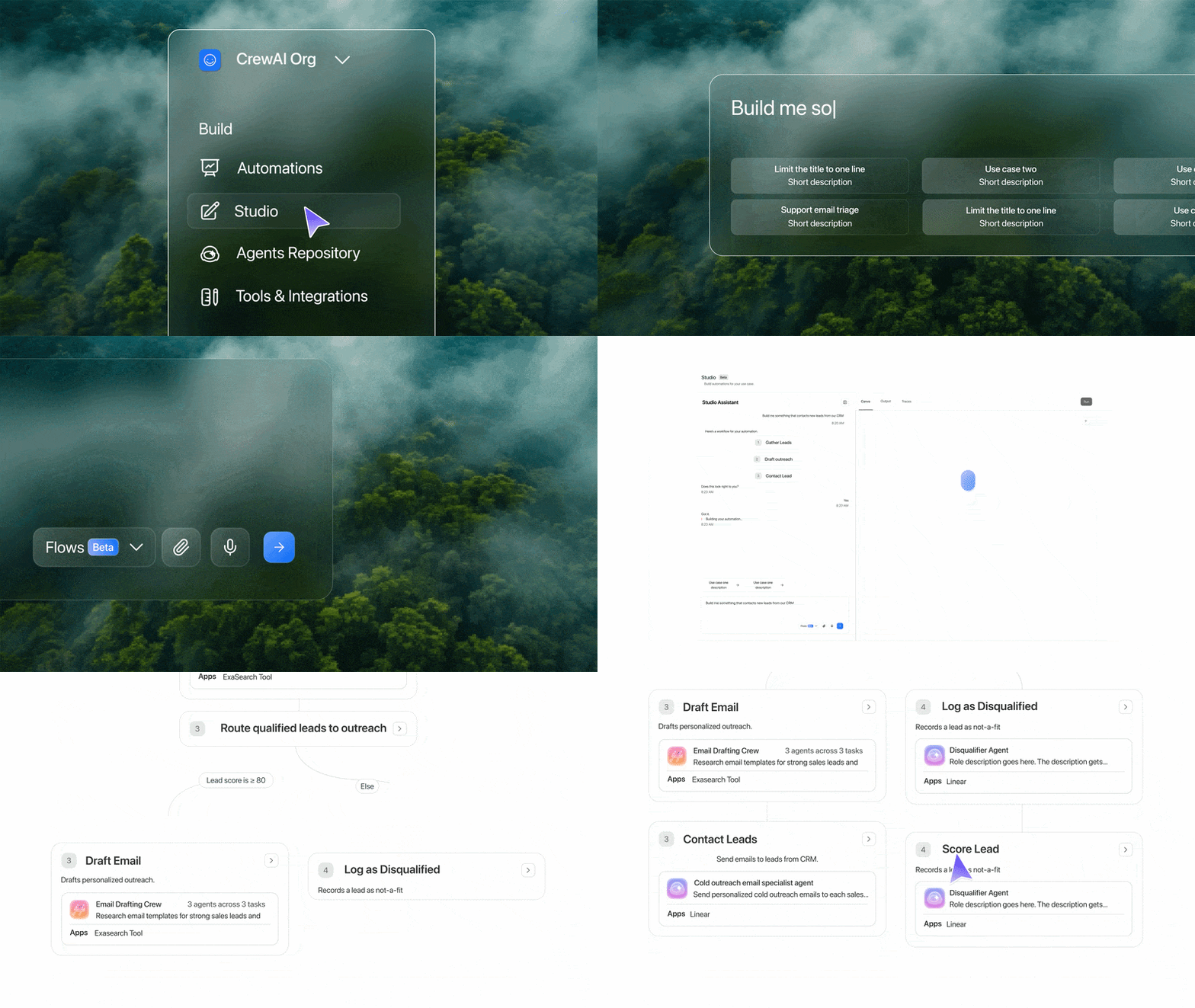
From there, a team can describe the system it wants to build.
Studio turns that into a working architecture: code, agents, tasks, tools, models, flows, memory, MCPs, external agents, and the shape of the agentic system itself. That architecture is not starting from zero. It is informed by the patterns we have seen across billions of executions and more than 700,000 agentic architectures extracted from over billions agentic executions.
This matters because most teams do not struggle with imagination. They struggle with turning intent into a system that has the right shape.
Own it
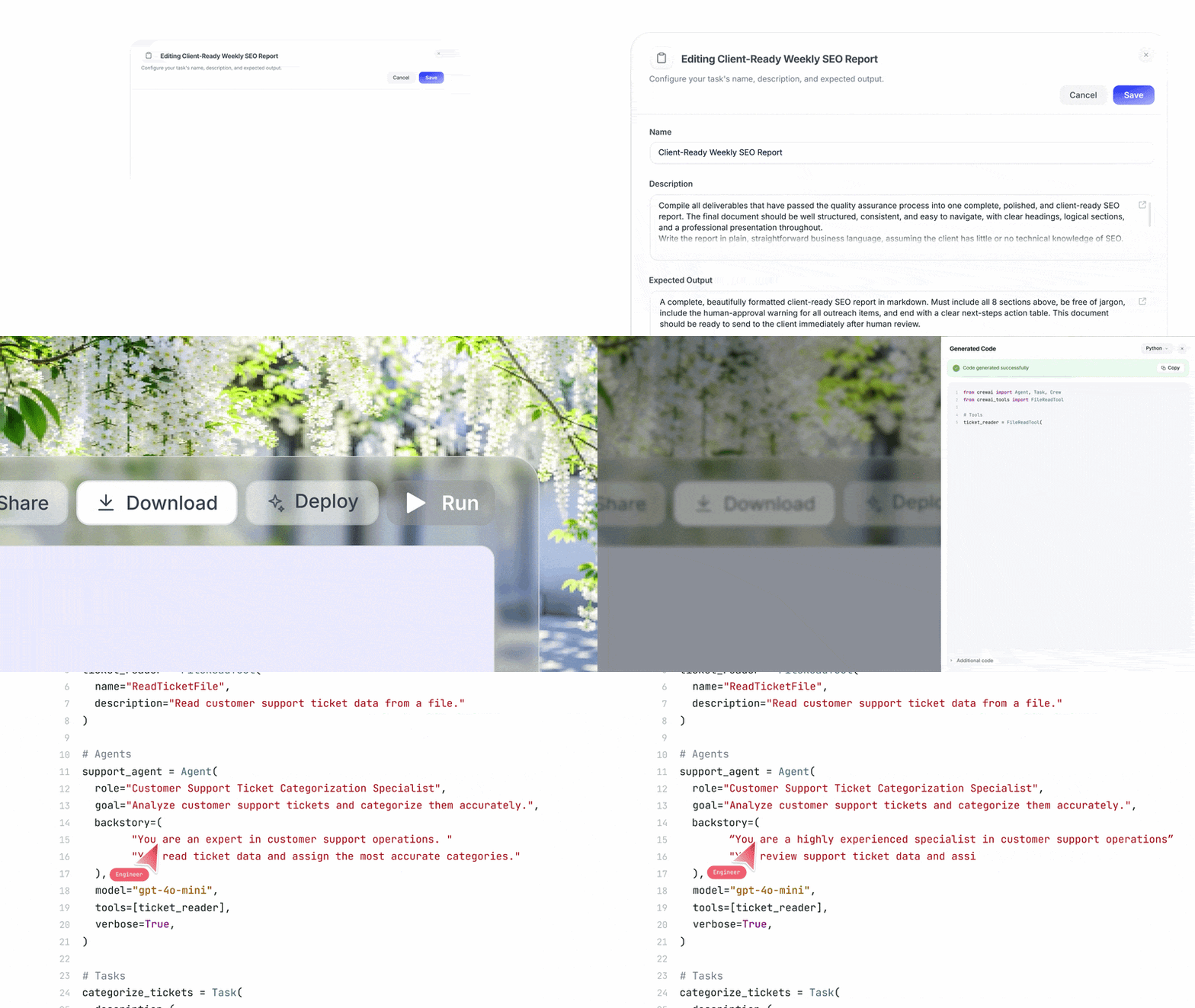
Then the important part: you own what gets built.
You can download it. Modify it. Extend it. Move from visual building to code without throwing the work away. Not only that, we support any model, any cloud, any integration, self-hosted or managed.
That is the difference between a builder that helps you start and a builder that traps you. If the system matters, the company needs to be able to inspect it, change it, and carry it forward.
Run it
When you are ready, you can deploy to the same infrastructure your engineers already use in CrewAI AMP, not a separate prototype environment that has to be rebuilt later. The same runtime, with governance, security, observability, cost controls, and deployment paths already attached.

The reason Studio works is what's underneath it.
Agents are not always the answer. A serious enterprise agentic system needs to understand the difference.
That is why building Crew Flows on studio matters. Flows allow you to combine deterministic controls, normal code, LLM calls, single agents, full crews, human gates, and integrations in one system.
Flows give teams a way to put reliability where reliability is needed and agency where agency actually helps.
The point is not just to get more people building use cases. The point is to make sure what they build starts inside the right production environment.
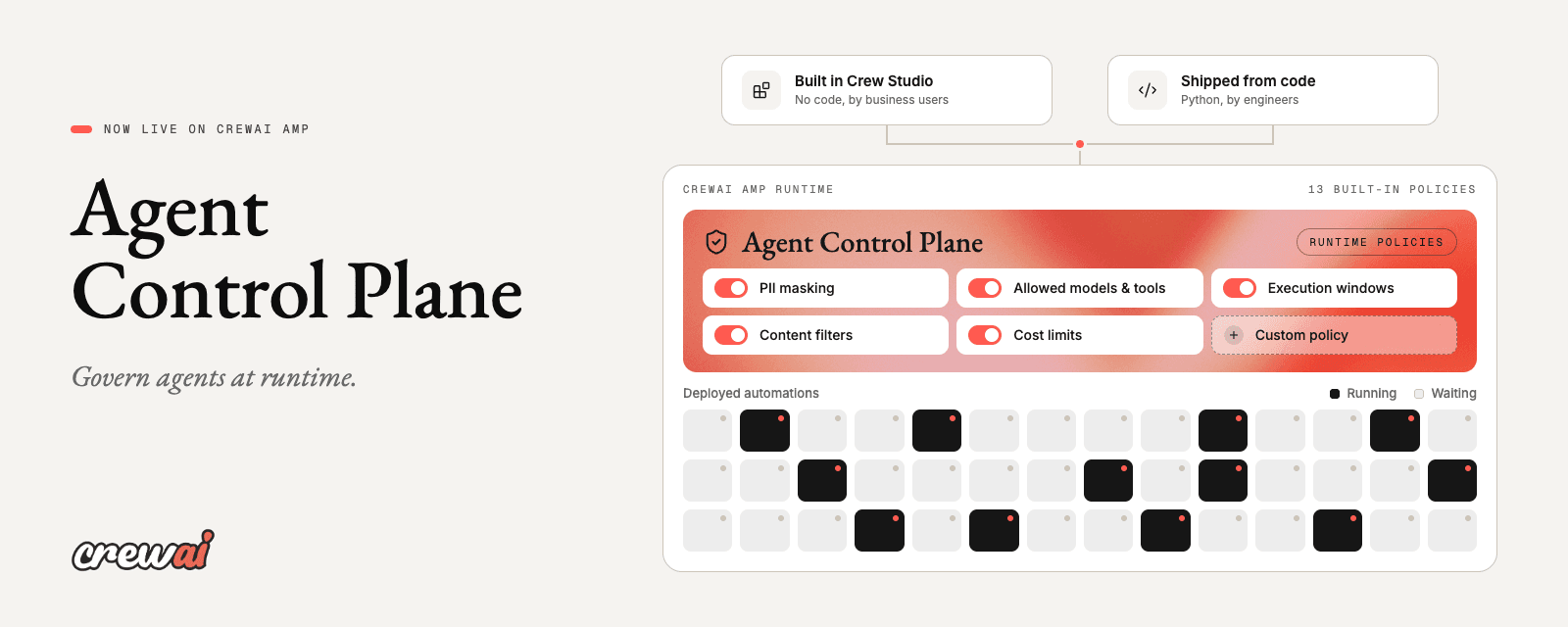
Governance is set once and enforced everywhere. Observability, cost controls, identity, permissions, audit trails, approved models, and deployment paths are not separate chores someone remembers later. They are part of the environment from the start.
That changes the compounding curve.
The first agent matters. The tenth matters more. Every approved tool, skill, model, policy, integration, and flow becomes a reusable building block for the next team, while the system itself learns from its usage
That is how you remove the bottleneck without creating chaos, business teams can build truly impactful use cases closer to the work and engineers focus on the systems that need deeper technical ownership, but both can share the same benefits of re-using the platform, the infrastructure and the same building blocks. And the platform teams govern the whole thing without becoming the only path to shipping.
Companies should not have to bet their agent strategy on one model, one cloud, one incumbent suite, or one system of record. The building layer should work with the models, clouds, integrations, data systems, and agents the enterprise already uses.
The companies that will capture most value from AI Agents will be the ones that can turn real business problems into governed systems that run in production, improve over time, and keep creating value after the first team that built them has moved on. And that does require a new building layer.
That is what Crew Studio is for: closing the gap between the AI value enterprises know is possible and the agentic systems they can confidently put into production by offering a new build and runtime layer that has extreme low floor, so anyone can use it but an extreme high ceiling to systems being built with it can be ambitious and deliver value.
Don't want to take it from me? Great! Go try it yourself for free, tell us what you think!
Related News
 Crew AI Enterprise
How to govern enterprise agents at runtime with the CrewAI Agent Control Plane
João (Joe) Moura | October 16, 2026
 Crew AI Enterprise
The People Who Understand Don't Build. The People Who Build Don't Understand.
Pedro Moura | August 14, 2026
 Crew AI Enterprise
Crew Studio: The Automated Agent Builder
Jesse Miller | July 28, 2026


