What is an AI Agent?
July 14, 2026
And how to start building one
Every board deck this quarter has a slide on agentic AI. Every roadmap has "agents" pencilled in for Q3. But there is one question that nobody's answering: What even is an AI agent? In this edition, we pull together: how Bill Gates, a16z, Sequoia, and João (our founder) actually define an agent show you what's getting mislabeled as one (spoiler: your Zapier + ChatGPT setup doesn't count) and then hand you a 6-step, no-code playbook to build a real one, end to end, before you finish reading. By the time you close this, you’ll leave with a complete understanding of what an AI agent is and have built your first agentic workflow. So, let’s begin.
What is an AI Agent, really?
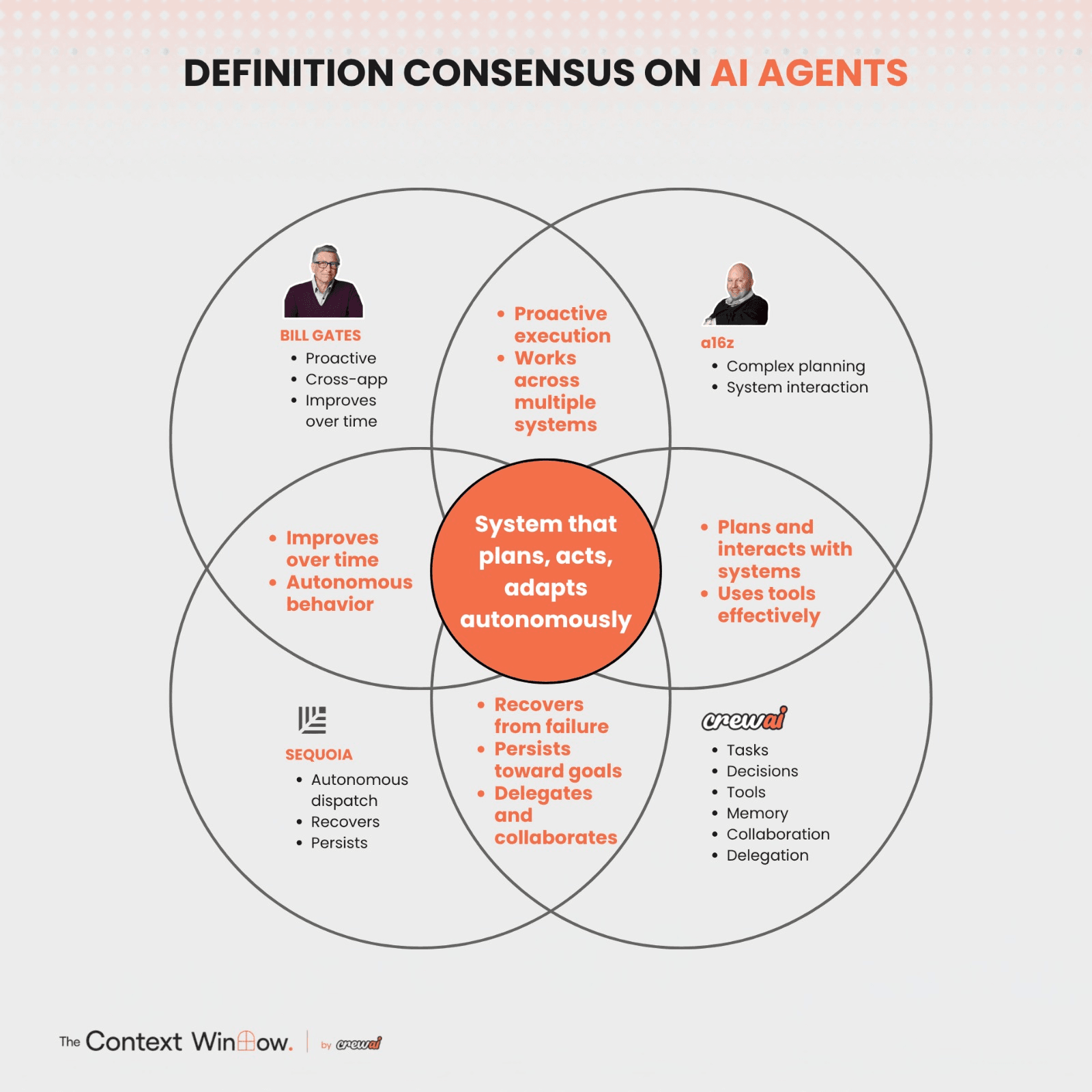
This is how the sharpest minds in tech characterize an AI agent:
Bill Gates' definition:
Proactive (acts without being asked what to do next)
Cross-application (operates across multiple systems)
Improves over time (learns from experience) a16z's definition:
Complex planning (breaks down a goal into multi-step sequences)
Interaction with outside systems (actually calls APIs, clicks buttons, reads data—not just generates text) Sequoia's definition:
Dispatched autonomously (you tell it the goal, not the steps)
Recovers from failure (if an API times out, it retries intelligently)
Persists until job is done (doesn't give up after one attempt) This is how Crew AI’s founder João describes AI agents: An agent is an autonomous unit that can:
Scan its environment.
Use tools to accomplish objectives.
Maintains memory of interactions.
Makes decisions based on its role and goal
Communicates, collaborates, and delegates.
Recovers and adapts from feedback “All four are saying the same thing: An agent is a system that can plan, act, and adapt without human intervention at each step.
What’s Not an Agent?
Custom GPTs Aren't Agents. You describe what you want it to do. It generates text based on that description. Text-in, text-out. ChatGPT isn't an Agent. Neither is Claude. It can reason through problems. It can write code, draft emails, and explain quantum physics. But it can’t execute anything itself (yet, atleast). The Automation-Wrapped-in-LLM isn’t an Agent. Your team hooks Zapier to ChatGPT. When a customer emails, ChatGPT summarises the email, then Zapier creates a ticket. This is a workflow. It can’t decide which action to take (summarise this email OR escalate this email OR refund this customer).
The Sneaker Factory Story
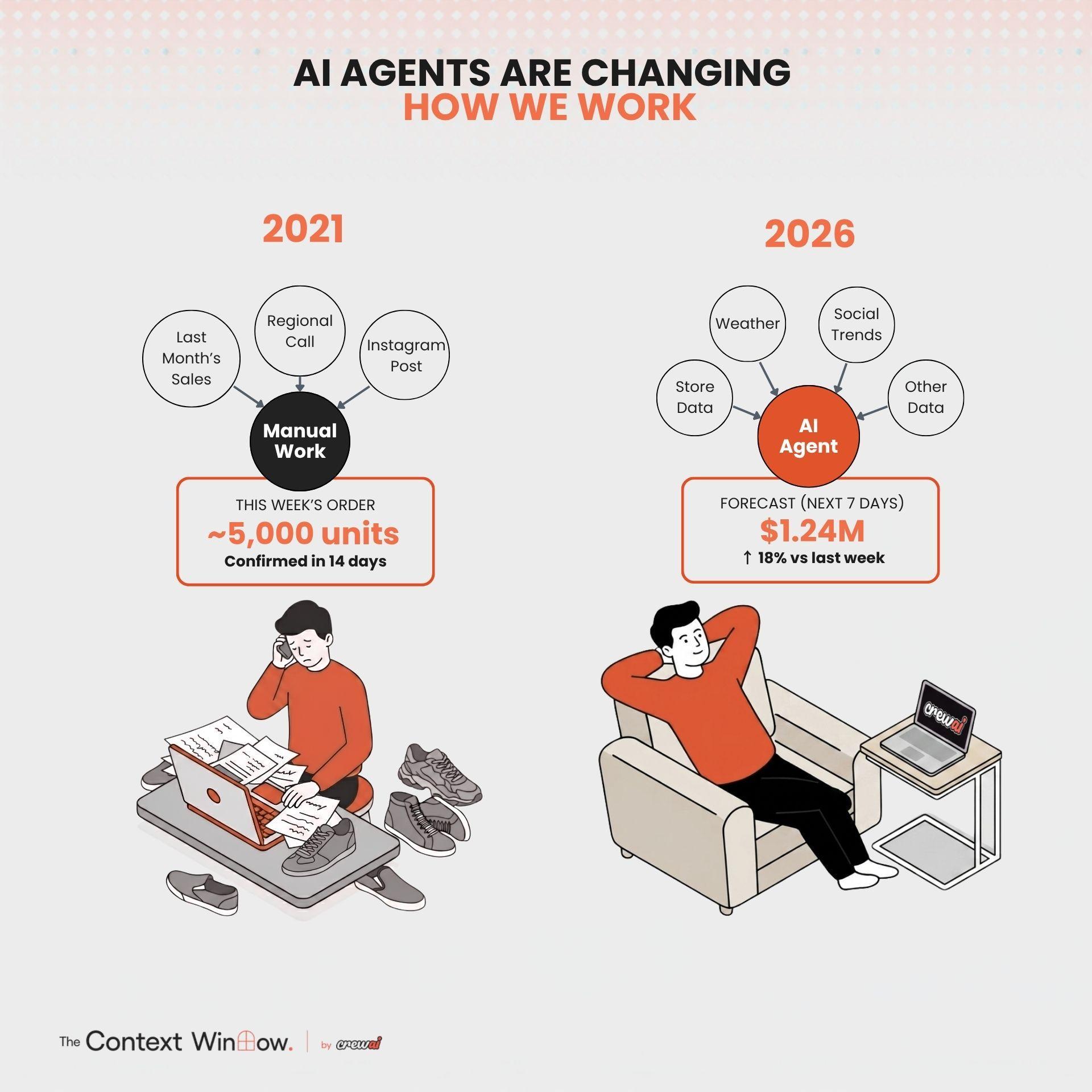
Pre-Agents: Picture a sneaker brand in 2021. Every Sunday night, their planner asks himself: how many pairs of sneakers should be manufactured? He pulls last month's sell-through numbers. He calls a regional sales lead, who mentions a local influencer just wore the shoe on Instagram. He eyeballs it, picks a number, emails the factory. If he’s wrong, it's expensive either way. Too high, and the brand discounts unsold inventory three months later. Too low, and the shoe sells out in six days while customers buy a competitor's pair instead. The planner learns about it 14 days later. Post-Agents Now picture 2026, same brand, an agent doing the job. It checks sell-through data in real time, and flags the influencer post the moment it happens. It then calculates next week's number, validates that the number is within budget and inventory restrictions and sends it straight to the factory. If Chicago starts selling twice as fast as predicted mid-week, the agent doesn't wait for Sunday; it adjusts, reroutes inventory, and flags the change with its reasoning attached. He's not pulling and guessing anymore. He's reviewing the agent's call and overriding it when his judgment catches something the data doesn't know yet.
The Core Foundational Zones of an AI Agent
How builders should actually think about it:
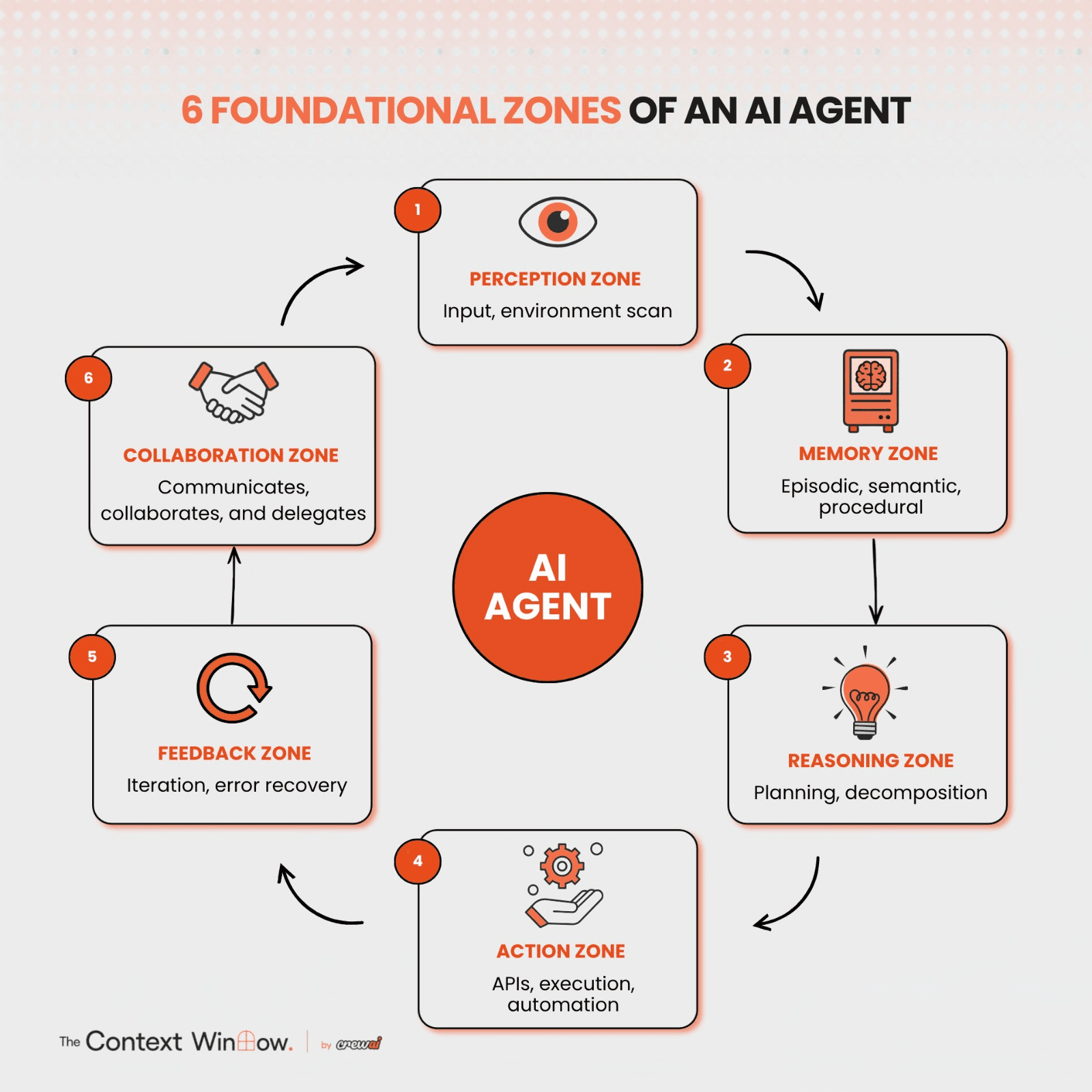
Scans Its Environment (Perception Zone) The agent scans its environment (what the current state is, what data is available, and what tools it can access).
Sneaker Example: It reads real-time sell-through, regional weather, and social mentions across every store.
Maintains Memory of Interactions (Memory Zone) The agent remembers what happened before, so it doesn't repeat mistakes or re-learn the same context. Sneaker Example: It remembers last week's forecast and how actual sales diverged from it.
Makes Decisions Based on Its Role and Goal (Reasoning Zone) The agent decomposes the goal into steps and plans. Sneaker Example: Goal = "Set next week's production number" → weigh sell-through, weather, and social signals → decide the number.
Uses Tools to Accomplish Objectives (Action Zone) The agent actually performs tasks such as calling APIs, updating databases, and executing code. Without this zone, it's just a smart chatbot. Example: It sends the production number straight to the factory's ordering system.
Recovers and Adapts from Feedback (Feedback Zone).
The agent observes the outcome and adjusts (retries, escalates, or tries another approach) if something's off. Sneaker Example: Chicago sells twice as fast as predicted, so it revises the number mid-week and flags the change with its reasoning.
Communicates, Collaborates, and Delegates (Collaboration Zone) It shares context with other agents, hands off subtasks when another agent (or human) is better suited for them. Sneaker Example: The forecasting agent doesn't reroute Chicago's inventory itself. It delegates that to a logistics agent, while flagging the demand spike to a pricing agent that decides whether to adjust markdowns elsewhere. This loop: Perception → Memory → Reasoning → Action → Feedback → Collaboration is what separates an agent from everything else.
How to Build Your First Agent (The 6-Step Playbook)
Forget the theory for a second. We're going to build a real agent together with CrewAI right now. So grab your coffee. And go live with this. (Disclaimer: I picked a very simple case for this exercise, so it doesn’t exactly meet all our own criteria for an agentic system, but hopefully it is illustrative)
Step 1: Open CrewAI (it’s free)
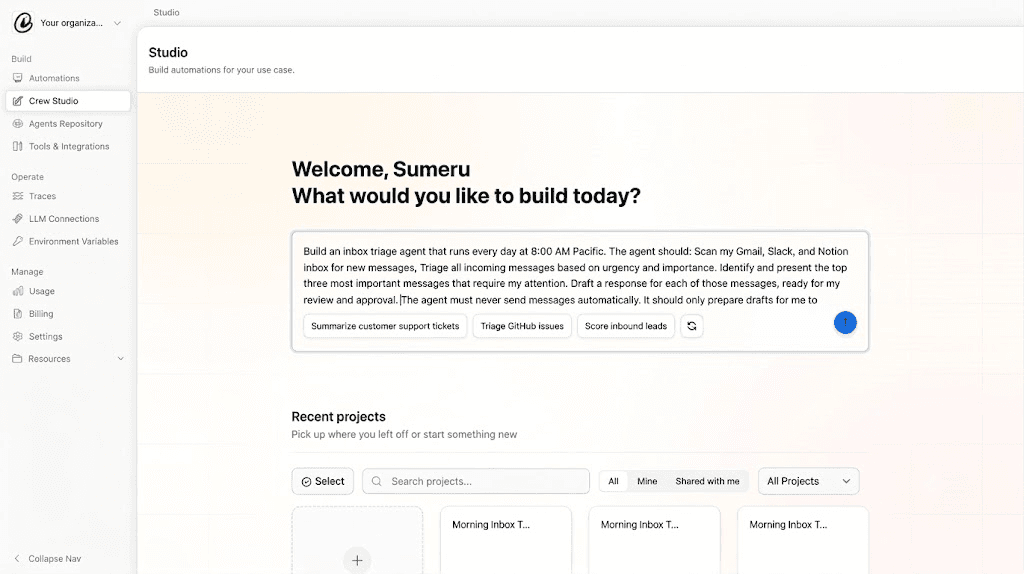
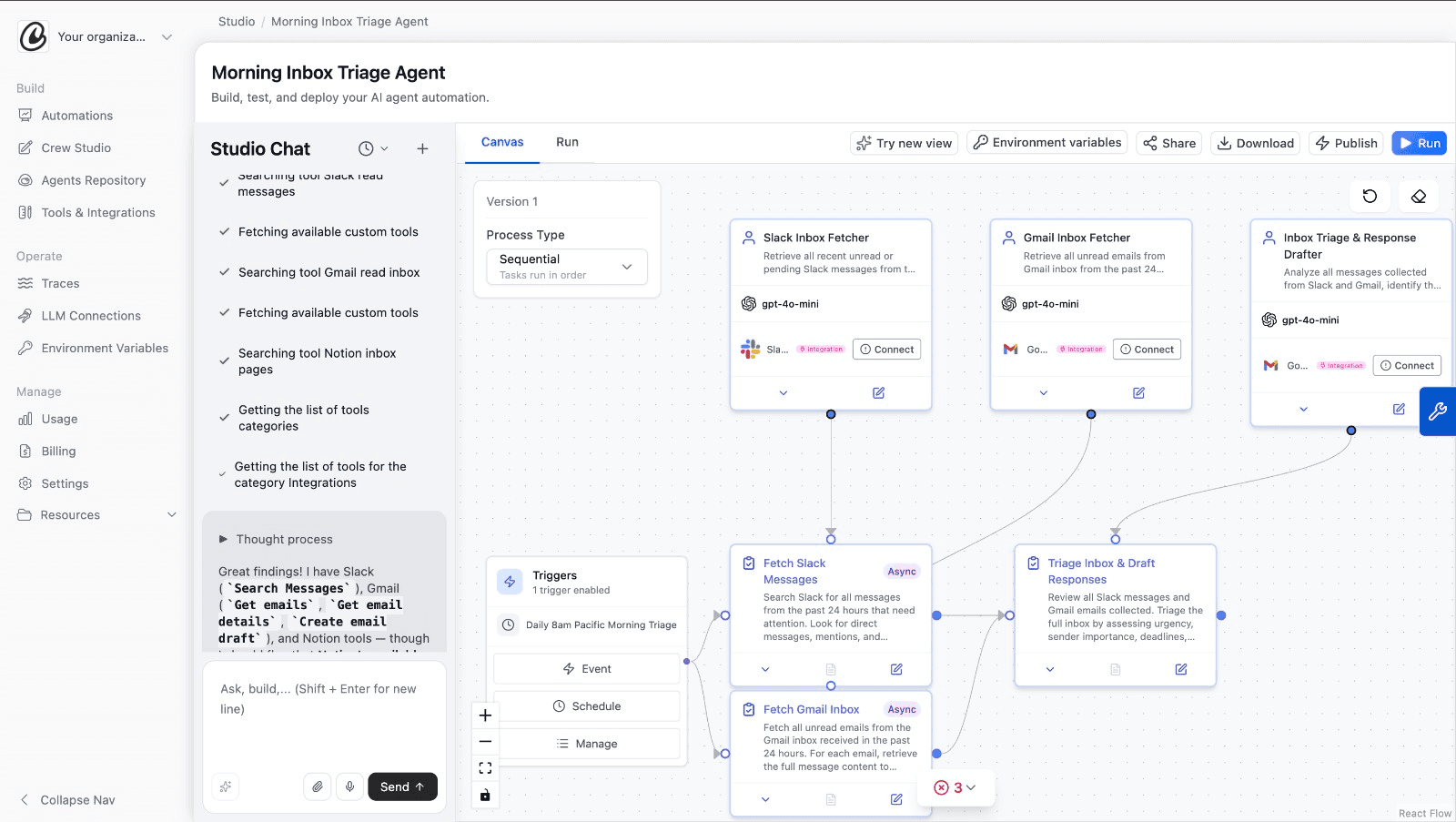
Open CrewAI and go to Crew Studio. This is the playground where you can build agents quickly seemingly quick, without writing a single line of code.
Step 2: Write the prompt
Enter one prompt in plain English. For example: “Build an inbox triage agent that runs every day at 8:00 AM PST. The agent should:
Scan my Gmail and Slack inbox for new messages.
Triage all incoming messages based on urgency and importance.
It should weight messages from customers and my boss as more important, vendors and contractors next, and updates and calendar changes last
Identify and present the top three most important messages that require my attention.
Draft a response for each of those messages, ready for my review and approval.
Important: The agent must never send messages automatically. It should only prepare drafts for me to approve before anything is sent.” CrewAI Studio takes it from there.
Step 3: Let Crew build the agent architecture
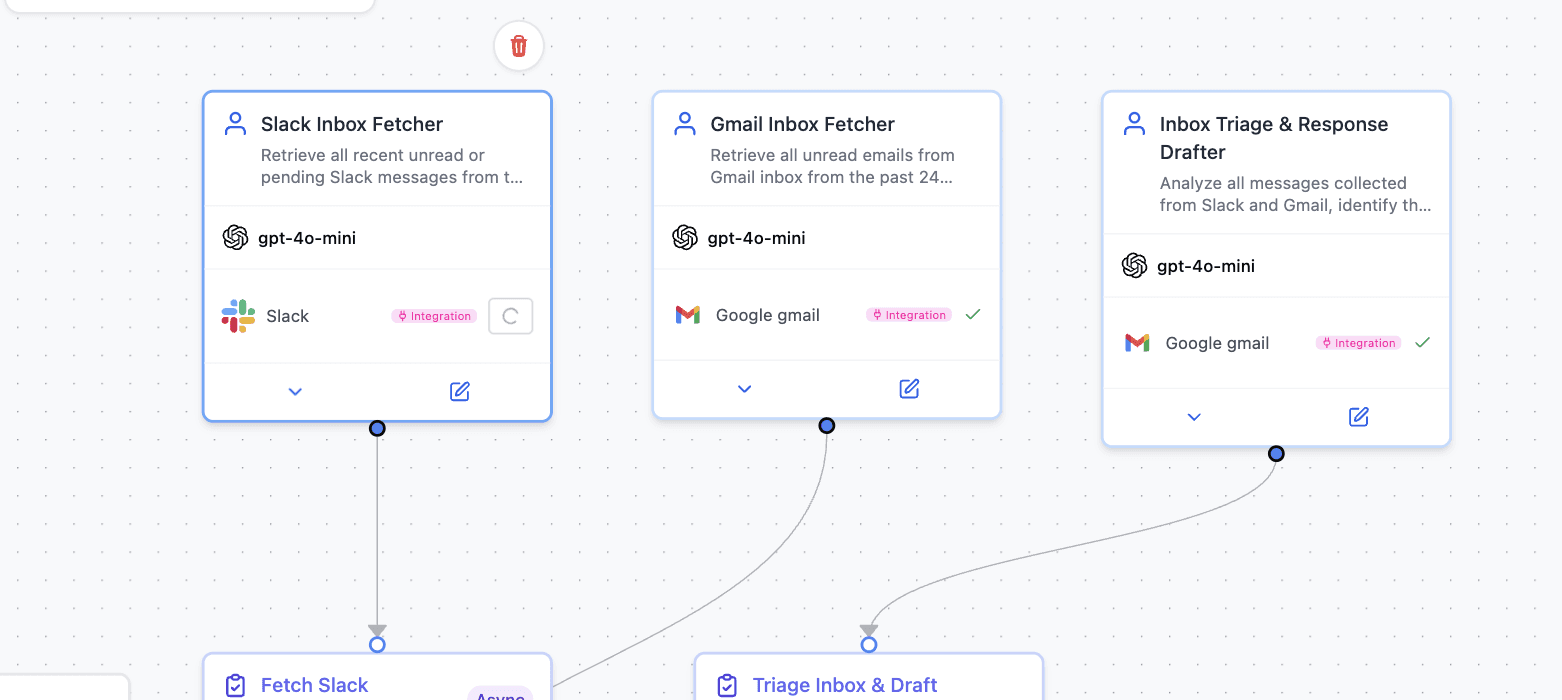
In under two minutes, it spins up three agents, (a Slack fetcher, a Gmail fetcher, and a triage-and-draft agent), and wires the tasks, triggers, and handoffs between them. This is the same loop (perception, memory, reasoning, action) made visible instead of buried in a terminal.
Step 4: Connect your tools
Gmail, Slack, Notion: Whatever the agent needs to touch, you authorize it here. This is the Action Zone that brings our agent alive.
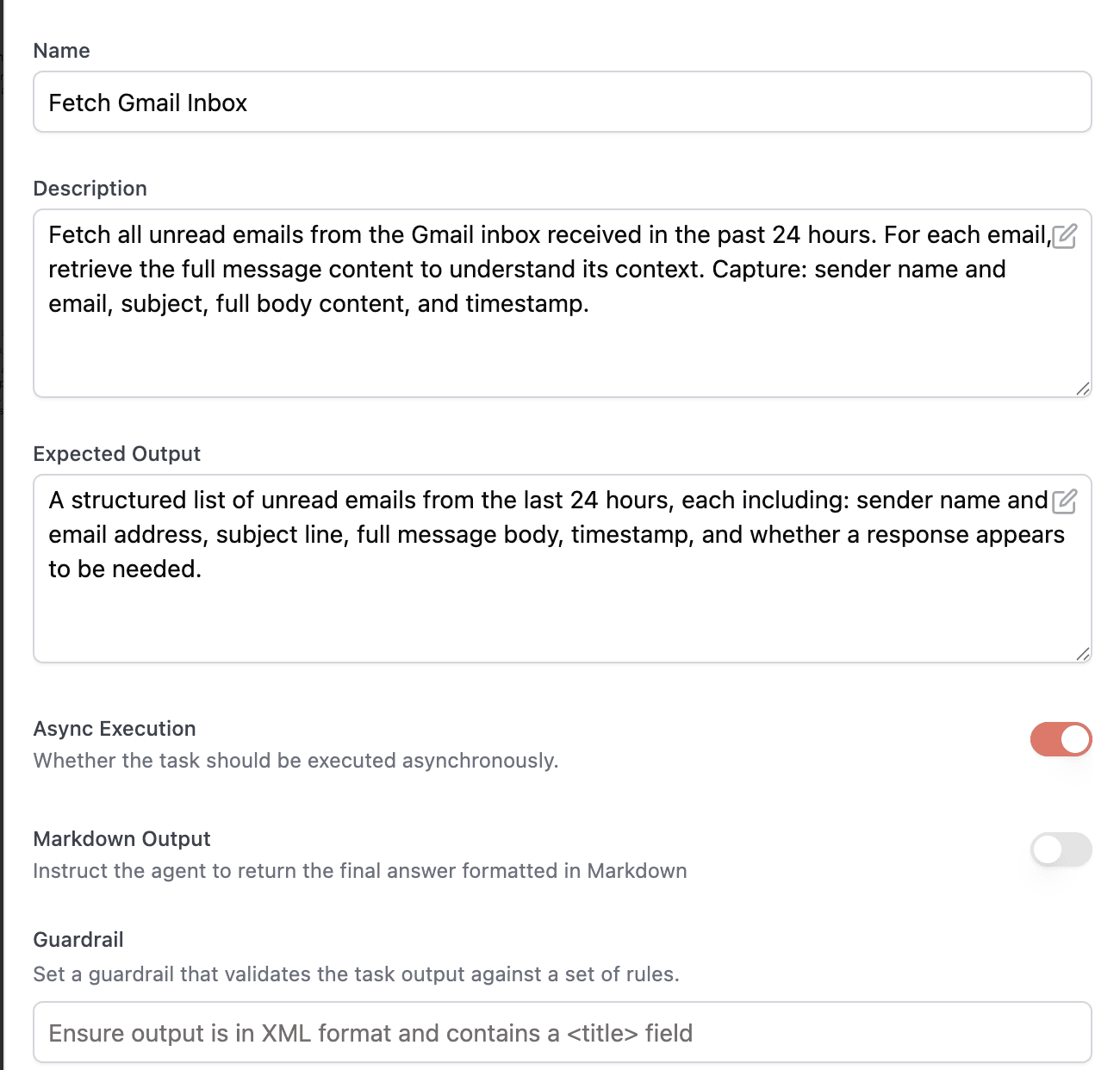
Step 5: Audit every agent
Open each agent and check its instructions:
Does it draft only, never send?
Is a human confirmed in the loop?
Is the output format exactly what you want: Gmail draft, doc, Slack summary, or did you leave it to guess?
Step 6: Run it and give feedback
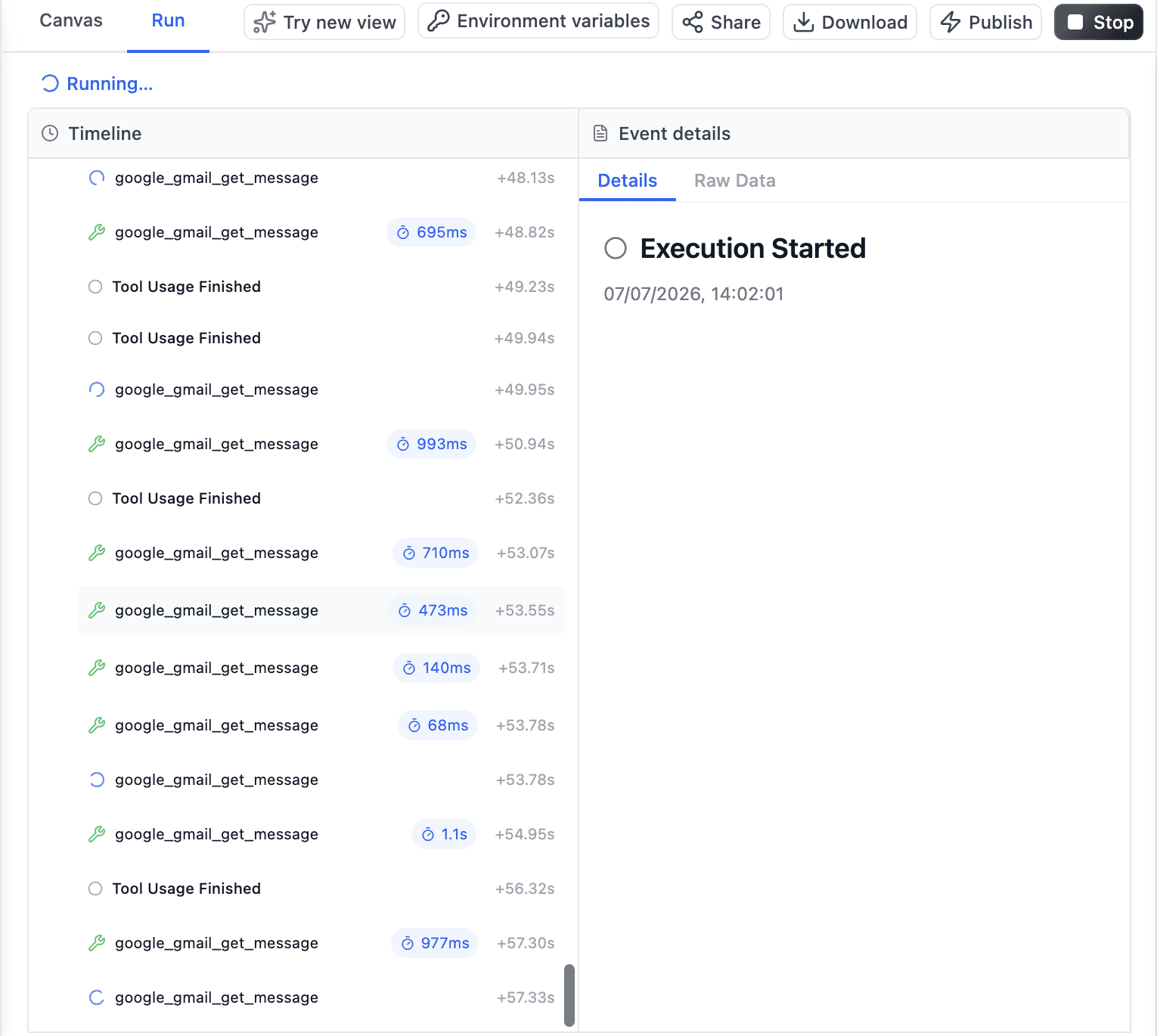
Execute the crew, watch the LLM calls and costs in real time, then correct anything off. That correction closes the loop, and the agent gets sharper the next time it runs.
Where This Leaves You Your life can change the moment because things could finally act, perceive, remember, reason, act, adjust, without her closing the loop herself. That's the real difference between an agent and everything being sold to you as one. You don't need to automate everything now. But you need one narrow, well-measured win. Then another. Start there.
This weeks treats
One great long form read -
46 Thoughts on the Near Future (I dont agree with many of them, but they are thought provoking none the less)
The AI Industrial Revolution by Naval Ravikant
Two tweets worth checking out:
The Dynamo and the Computer
Three songs you should add to your work playlist
Dreams - 2004 Remaster
Dave Brubeck - Take Five
Stevie Ray Vaughan - Little Wing
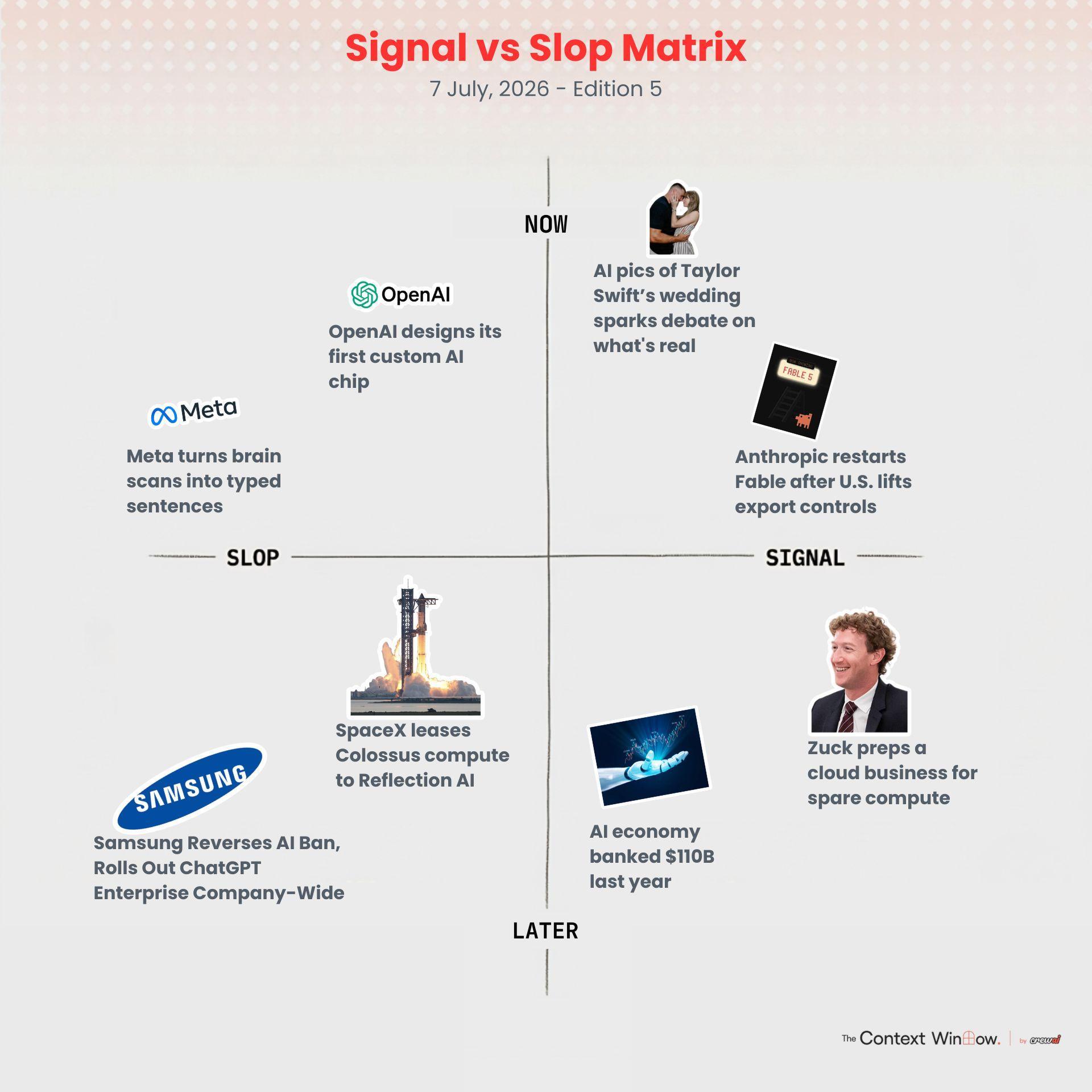
Signal vs Slop
Every week we plot what happened in AI on two axes. Slop ↔ Signal: was there actual substance, or was it noise? Now ↔ Later: is this something you should act on this quarter, or a signal about where things are headed in 1-3 years? Let's see what happened this week.
Anthropic restores Claude Fable 5 as US lifts export controls The Commerce Department reversed the June 12 order after Anthropic added a new safety classifier; Fable is back for all customers, though flagged queries get rerouted to Opus 4.8.
Fake AI pics of Taylor Swift’s wedding goes viral within hours of the ceremony, with fans and even a community-notes flag debating what was real. Swift had already trademarked her own voice and image last year specifically to fight AI impersonationAI-powered movie production with Palmier Claude makes the first cut from raw footage, Palmier Pro handles captions and pacing on the timeline, no more bouncing between generation tools and the editor. 🔴 NOW / SLOP
Meta's Brain2Qwerty v2 turns thoughts into text Trained on 22,000 sentences from nine volunteers wearing an MEG helmet; averages 61% word accuracy, best participant hit 78%. Genuinely early-stage assistive-communication research, not a product roadmap.
OpenAI unveils its first custom chip, Jalapeño Still in testing, with commercial deployment not planned until end of 2026. Infrastructure story, not something that changes anyone's roadmap this quarter. 🟡 LATER / SIGNAL
Zuck pushing cloud to sell excess AI compute "Meta Compute," led by Dina Powell McCormick, Daniel Gross, and Santosh Janardhan, would let outside developers rent Meta's spare capacity and access hosted models like Muse Spark, going head-to-head with AWS, Azure, and Google Cloud.
The generative AI economy banked $110B last year Growing roughly 3x faster than the mobile or internet waves. ⚪ LATER / SLOP
SpaceX signs $6.3B compute deal, leasing Colossus capacity to Reflection AI Reflection has no public model and no revenue, just $150M/month committed for GB300 access.
Samsung reverses its ChatGPT ban, rolls out ChatGPT Enterprise company-wide Three years after the 2023 leak, Samsung's DX division gets ChatGPT, Gemini, and Claude side by side, chip design teams stay excluded. A governance-maturity story more than a strategy shift. Go find the big idea. Catch you next week. Sumeru, Crew AI