The 7-Step AI Ladder Nobody Told You About
September 8, 2026
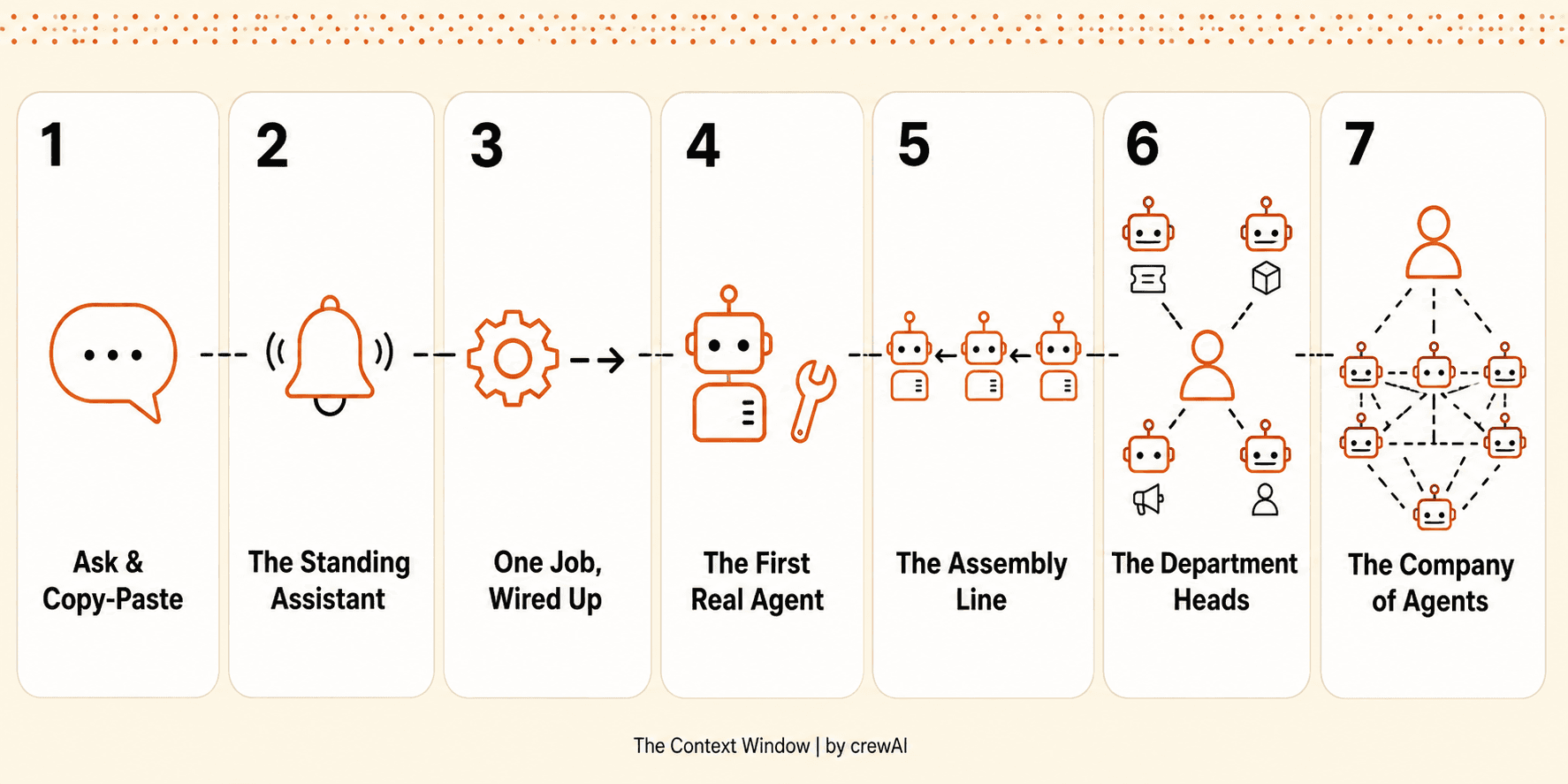
From copy-pasting in ChatGPT to a Company that runs itself. Steph runs a sneaker startup called Stride. Stride has 12 people, making 6 figures a month, and she still personally approves every Instagram caption before it goes out. She sources rubber, she replies to angry emails, she runs the ads. She is not an engineer. She's a founder who just happens to got to know that these new age brands have started to use AI. That’s the part nobody actually disagrees on: everyone is using AI now. That part's boring. What separates one founder from another isn't whether they use it, it's how far up the ladder they've climbed, and most people don't even know the ladder exists. So we built it. Seven levels of using AI, starting with copy-pasting into ChatGPT and ending with a company that runs itself. Here's Steph’s ladder, stage by stage. Somewhere on it is where you actually are.
Stage One: Ask & Copy-Paste
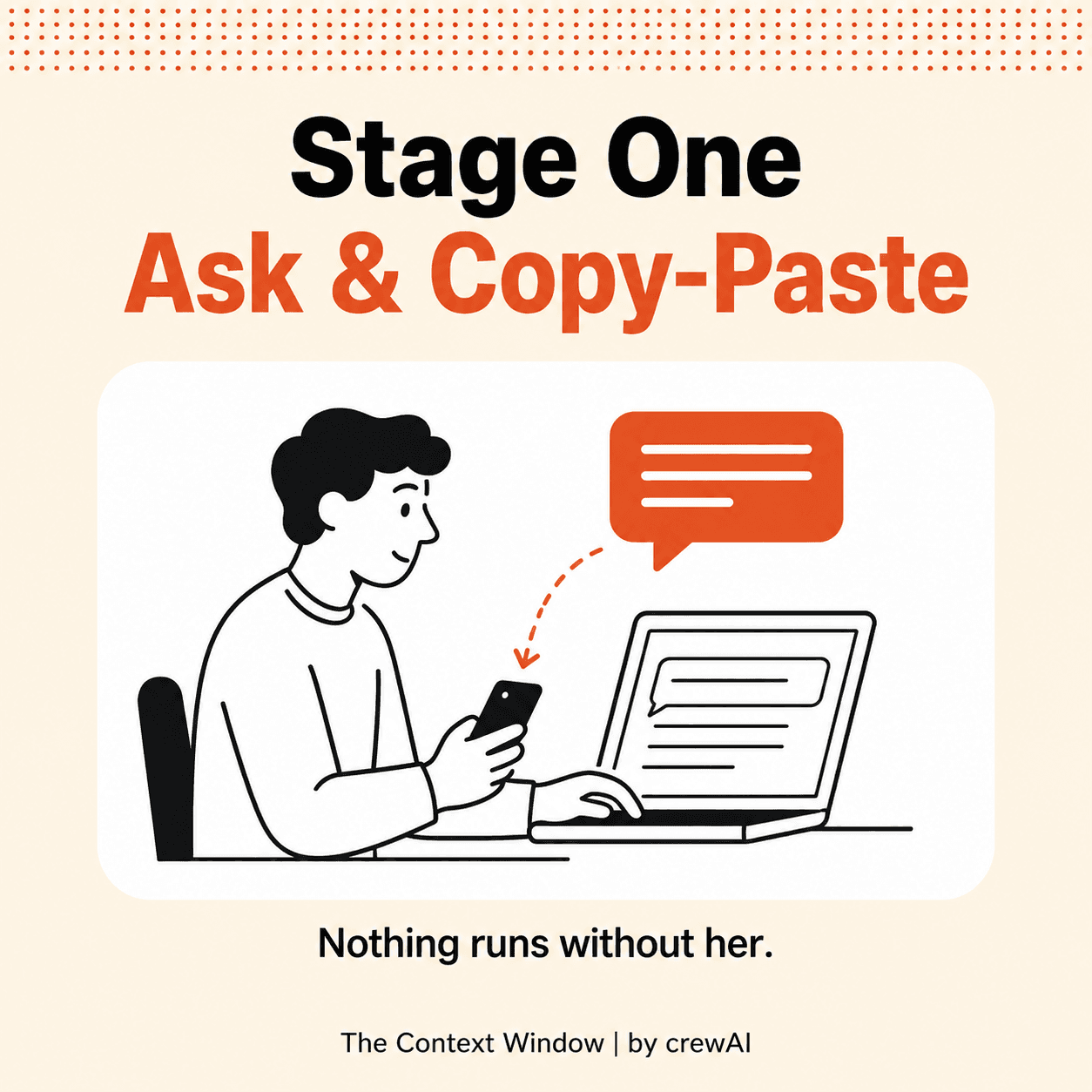
Steph opens ChatGPT the same way she opens Google. She needs a tagline for the new drop, a reply to an annoyed customer, a caption for Instagram. She types it, reads it, copies it, pastes it into WhatsApp or Shopify herself. Nothing is running without her. She closes the tab, and nothing happens. This is genuinely how most founders use AI today, and there's nothing wrong with that. It's just the floor, not the ceiling most people mistake it for. The test is: if everything you use AI for still requires you to open a tab and hit send yourself, you're here.
Stage Two: The Standing Assistant
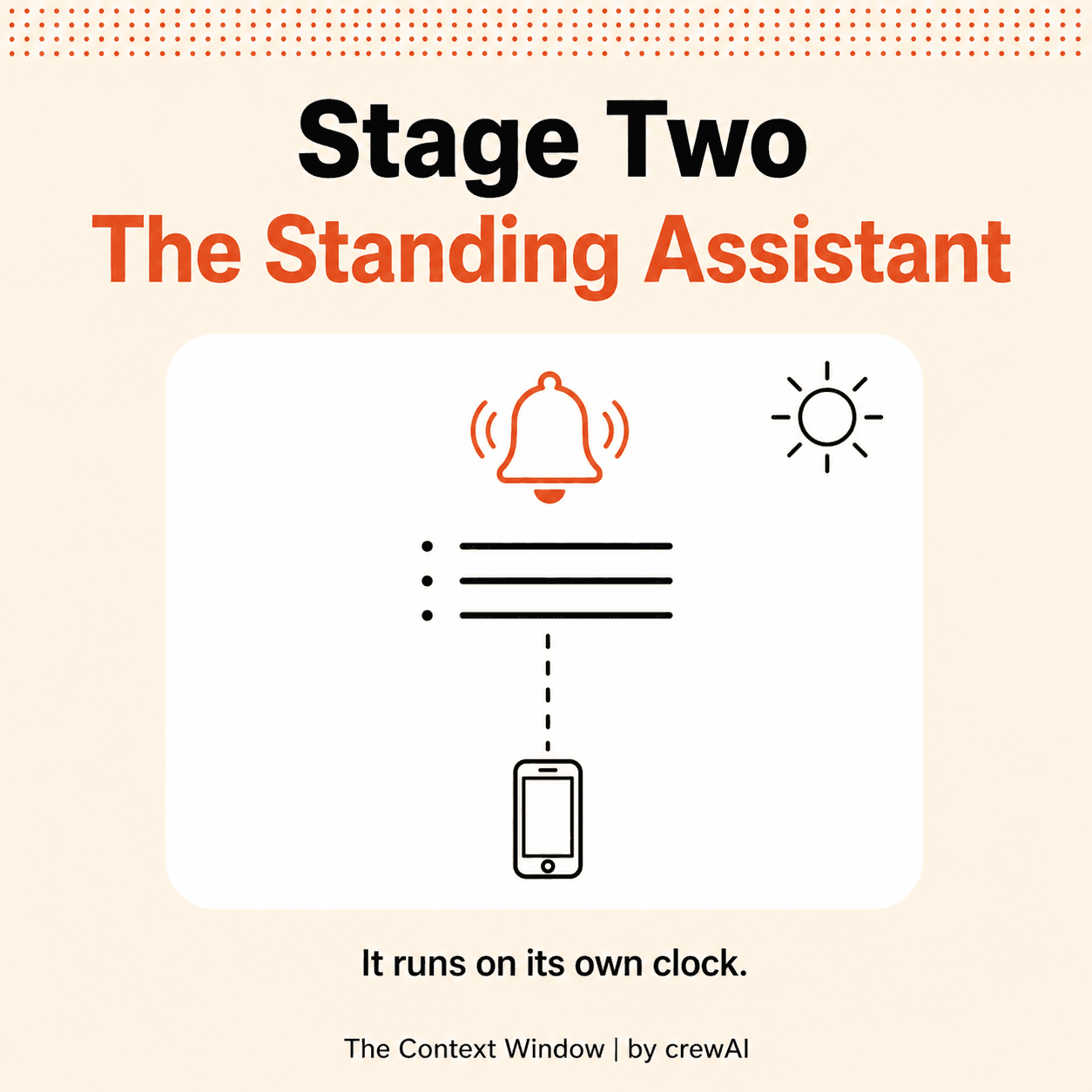
Then something small changes. Every morning, before Steph has even opened her phone, an assistant that was set up once, in plain language, has already read her inbox and Slack. It leaves her three lines: new orders overnight, a spike in size-9 returns, number of customer close to churning. Nobody asked for this today. But it still runs. That is an actual line most people never cross when it comes to leveraging AI, the moment AI stops waiting for a question and starts working on its own clock. It still doesn't touch anything, though. No replies get sent, no orders get changed. Steph reads the digest and does the work herself, same as always. Ask yourself the question: does anything AI-related happen in your business before you've asked for it? If not, you haven't actually left stage one yet.
Stage Three: One Job, Wired Up
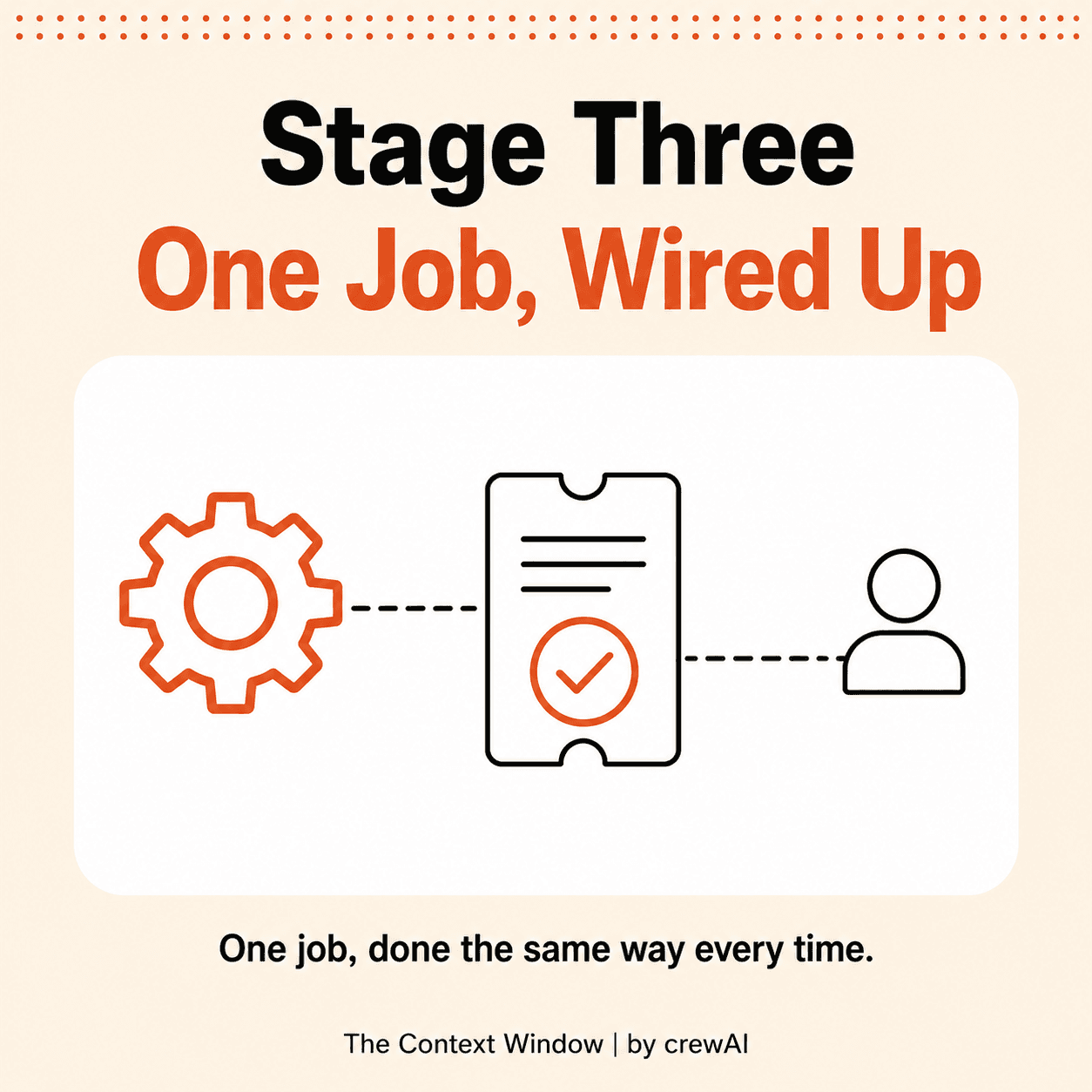
This is a big step-up. Instead of Steph or her one support hire reading every single one of the complaints / customer inquiries and comments, a system reads them first, tags each by type, drafts a first pass at a reply, and only kicks the messy ones up to a human. This is a bigger jump on the ladder than it looks. Someone had to sit down and write out exactly what "done" looks like for this one job, clearly enough that a machine could follow it without supervision. That's real work. But the system only knows the one job it was built for. Ask it to also flag which of these customers is angry enough to churn, and it can't, since nobody told it to. It’s not about whether it's running without you, it's whether it's the same defined job, every time, without you re-explaining it. If you're still briefing it fresh each time, you're not here yet either.
Stage Four: The First Real Agent
Logically before a drop, Steph wants to find her best customers, the ones worth turning into ambassadors. The old way was a support intern spending months manually checking who actually has a real Instagram following. Instead, she gives an agent a goal in plain English: find our top 5% of spenders, check who has a real audience, flag the good ones. She gives it access to her customer data and Instagram, and lets it go. A few minutes later, she has her list. This is a dividing line that separates a workflow from an agent. Everything before this was a fixed process, done the same way every time. This is a goal, not a task, and the system had to figure out its own way there. By the way, these levels are not hypothetical. A DTC baby-products brand called Coterie did close to exactly this with an agent built by a company called Cotera, which scans their highest spenders across Instagram and Google for real ambassador candidates. Work that used to take a team of interns months, done in minutes, because the agent had a clear goal and real tool access, not just a prompt. The test is: did you hand it a set of steps, or a goal? If you're still writing out the steps, you're at stage three with a better assistant. If you handed over an outcome and it found its own way there, you've crossed the real line.
Stage Five: The Assembly Line
Ahead of every drop, instead of briefing and paying a marketing agency for weeks and waiting for five concepts back, a chain of agents does the whole job unattended.
One researches what customers are actually complaining about online.
A second writes ad scripts from those real complaints.
A third turns them into UGC-style video.
A fourth cleans up the audio and adds captions.
A fifth uploads the finished ads straight to Meta.
Nobody touches a single step, and dozens of ad variants come out the other end. The complexity here isn't in any one step. It's in how many steps got chained together without Steph being the one connecting them. Marketing-tech builder Cody Schneider has described close to this exact pipeline publicly:
Scraping Reddit for real customer pain points
Writing scripts off them
Generating video
Stripping dead air, adding captions
And uploading straight to Facebook, built once and reused for every new product.
The question to ask about your own setup: if a human (you), or an agency is still the one manually passing work between steps, you're not here. This stage only counts once the agents are handing off to each other.
Stage Six: The Department Heads
At this stage, it's not one pipeline, it's four running at once:
Inventory recommending reorders
Support triaging tickets
One scouting ambassadors
One generating ad creative.
Each pings Steph only when something crosses a line, stock running low, a refund spike, a customer at risk. This is roughly where the most AI-forward founders are trying to sit today. It's genuinely powerful. Steph has effectively hired a department head for every function without hiring anyone. But there is one catch. If a support spike and a shipping delay are actually the same root cause, she's still the one who has to notice that. The systems don't talk to each other. They only talk to her. If you're the one manually checking four different dashboards and connecting the dots yourself, you're at stage five but with better reporting. Stage six is when each system runs its own lane without you routing between them.
Stage Seven: The Company of Agents
Here, the systems from stage six stop reporting only to Steph, they start talking to each other. The support spike and the shipping delay get correlated automatically, and Steph gets one decision to review instead of five separate alerts. Her actual job stops being "triage five channels" and becomes "set the direction, review the outcomes, change the rules when something's off." The clearest real example of this is Siloh Moses, founder of a company called Uno OS, who has publicly documented running his business with effectively zero human employees and a full org chart built entirely of agents, covering functions a roughly $1.2 million team used to handle. He's currently running a public challenge to hit $1 million in nine months, solo, already well into it with no paid ads. The real test was never how many agents you're running. It's whether they're catching what you'd otherwise have to connect in your own head. If that correlation work still lives with a person, no matter how many agents are involved, you're at stage six. Worth being honest here, though. Not everyone building multi-agent systems agrees this is even a good idea. There's a real argument from practitioners running these systems daily that adding a coordination layer between agents just adds latency and new ways for things to break, and that a lot of what gets called "stage seven" in public is really still stage six, but with a nicer dashboard. Worth sitting with that, rather than treating stage seven as the obvious finish line. Final Subject: The 7 Levels of Using AI Everyday at Work Subject line A: How far up the AI ladder are you, really? Subject line B: The gap between using AI and being AI-native Subject line C: The AI ladder nobody hands you a map for Preview text: Voice Memo CEOs, AI pop stars, robot boxing leagues…
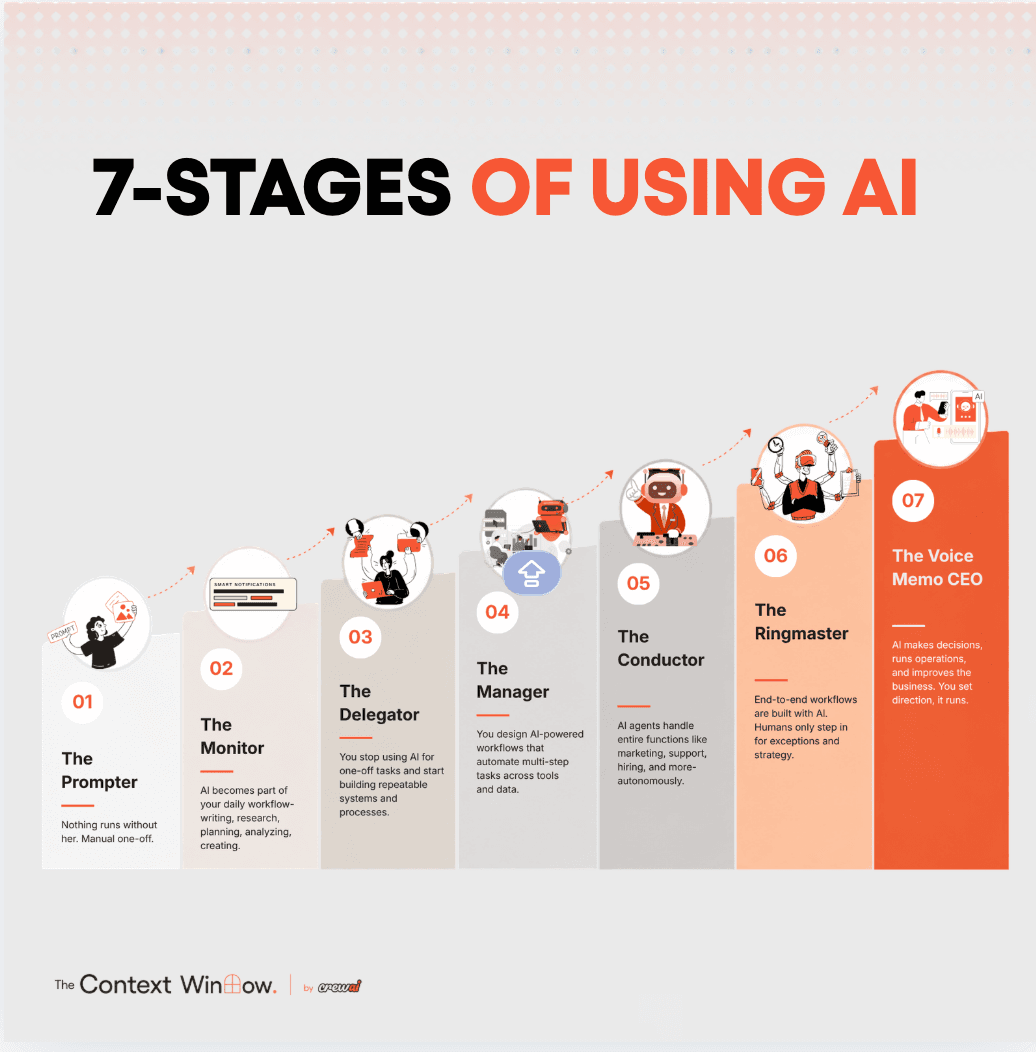
7-Stages of Using AI
Everyone is somewhere on this ladder. Figure out your level.
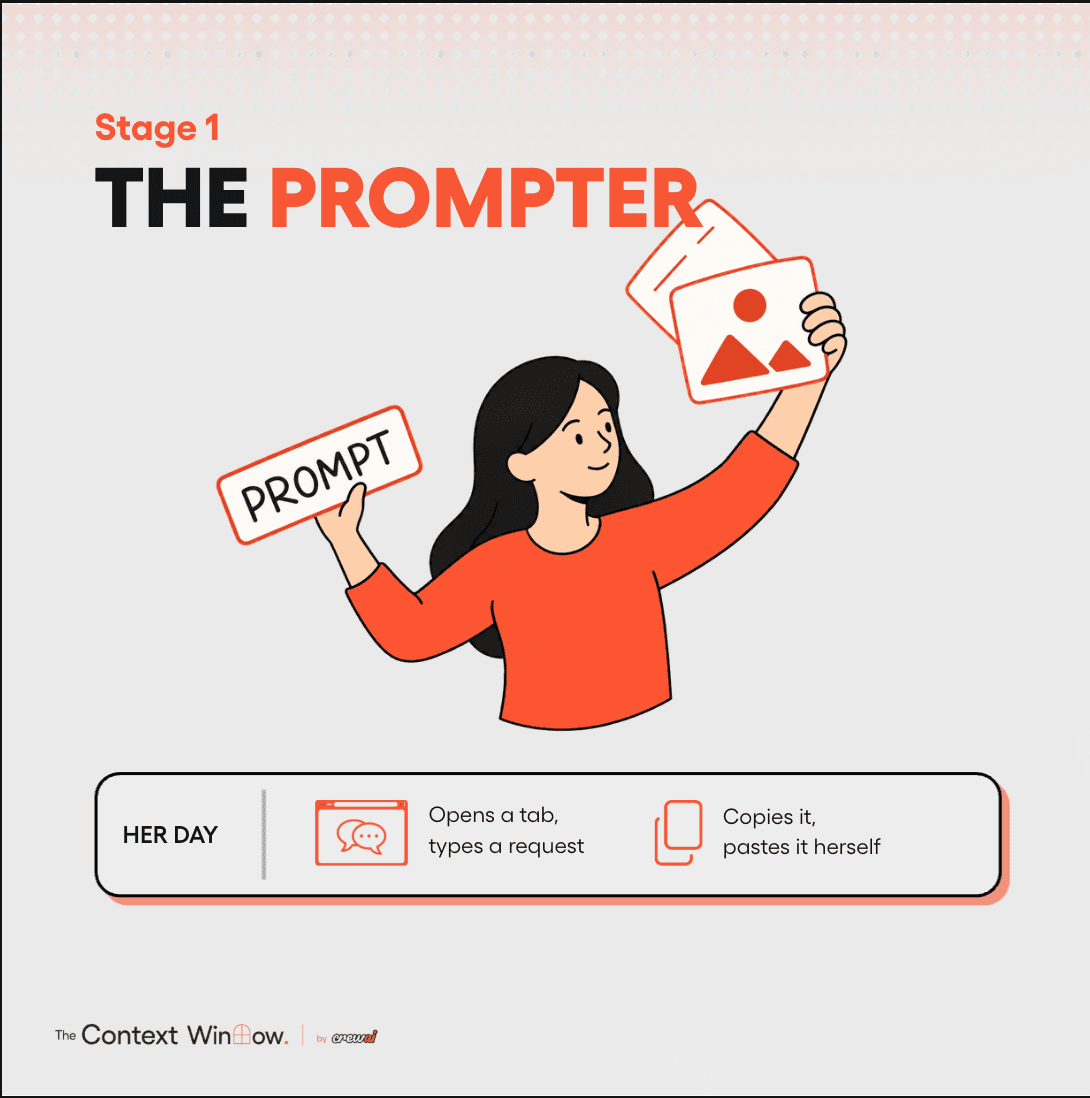
Stage One: The Prompter
Steph opens ChatGPT the same way she opens Google. She needs a tagline for the new drop, a reply to an annoyed customer, a caption for Instagram. She types it, reads it, copies it, pastes it into WhatsApp or Shopify herself. Nothing is running without her. She closes the tab, and nothing happens. This is genuinely how most founders use AI today, and there's nothing wrong with that. It's just the floor, not the ceiling most people mistake it for. We all know the starting stage. We’ve used it. The starting prompt goes something like this on ChatGPT / Claude: "I run a [type of business]. Write me 5 short Instagram captions for [product/drop] on a [describe the content piece], in a tone that's [describe your brand voice], each under 150 characters." The test is: if everything you use AI for still requires you to open a tab and hit send yourself, you're here.
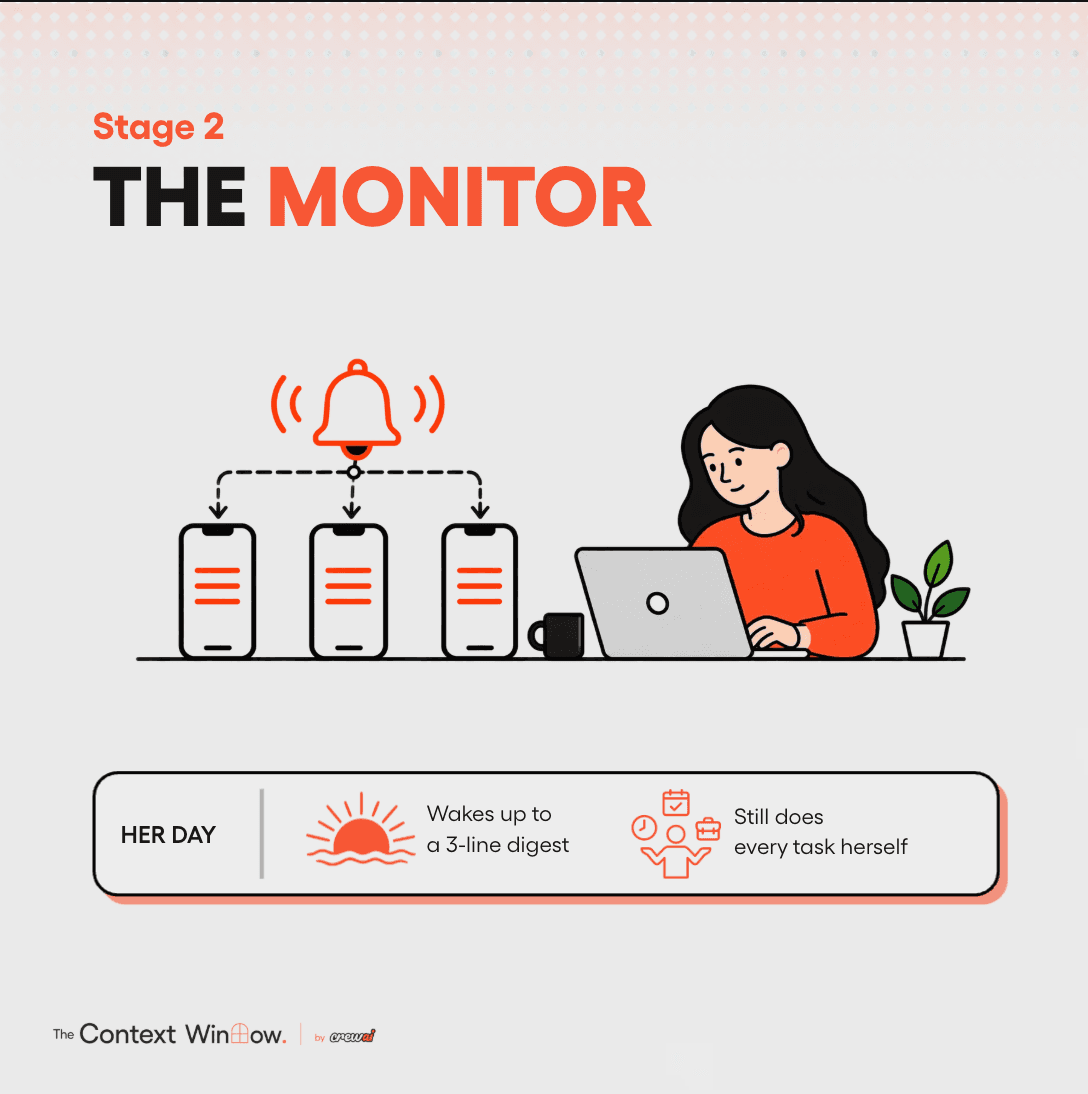
Stage Two: The Monitor
Then something small changes. Every morning, before Steph has even opened her phone, an assistant that was set up once, in plain language, has already read her inbox and Slack. It leaves her three lines:
new orders overnight,
a spike in size-9 returns,
number of customers close to churning.
Nobody asked for this today. But it still runs. That is an actual line most people never cross when it comes to leveraging AI. The moment AI stops waiting for a question and starts working on its own clock. It still doesn't touch anything, though. No replies get sent, no orders get changed. Steph reads the digest and does the work herself, same as always. One of our own team at CrewAI runs something like this daily: a scheduled Crew AI task that checks HubSpot, the website, and the last 24 hours of deal activity, then drops a five-bullet GTM update straight into Slack every morning, no one has to ask for it. Here's a version you can set up yourself in Crew AI: "Every morning at 8am, check [your CRM/inbox/analytics tool] for what changed in the last 24 hours. Summarize it in 5 short bullet points and send it to me." Ask yourself the question: does anything AI-related happen in your business before you've asked for it? If not, you haven't actually left stage one yet.
Stage Three: The Delegator
This is a big step-up. Instead of Steph or her one support hire reading every single one of the complaints / customer inquiries and comments, a system reads them first, tags each by type, drafts a first pass at a reply, and only kicks the messy ones up to a human. This is a bigger jump on the ladder than it looks. Someone had to sit down and write out exactly what "done" looks like for this one job, clearly enough that a machine could follow it without supervision. That's real work. But the system only knows the one job it was built for. Ask it to also flag which of these customers is angry enough to churn, and it can't do that. This stage covers what is typically called workflow automation. What's unique about this stage: Runs periodically Knows when to stop (human in the loop) Requires tooling (integrations to underlying systems) Combines deterministic and non-deterministic processes. Example: "Read every new customer support message as it comes in from {tool}. Tag each one as [billing / shipping / product issue / other]. Draft a reply for anything routine. If it involves a refund, a complaint about quality, or anything you're not confident about, flag it for me instead of replying."
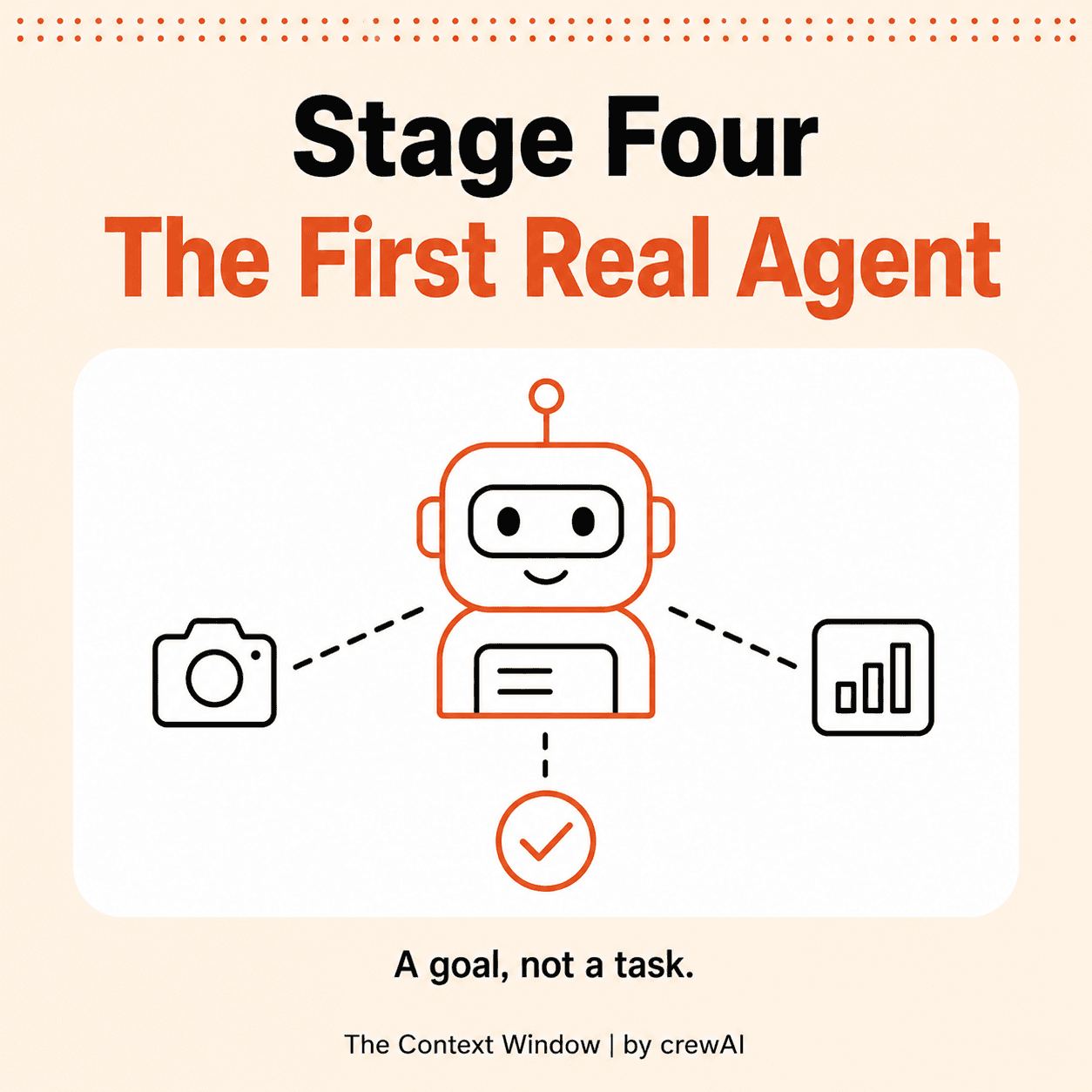
Stage Four: The Manager
Now here’s the thing. Steph's least favorite part of running Stride is not customers. Rather, it's vendors. Every month there's an invoice that never got booked right, a payment that went out twice, a supplier chasing her for money she thought was already paid. She used to block off a Sunday for it. Instead, she gives an agent a goal in plain English: keep our accounts payable clean, flag anything overdue or mismatched, tell me what needs my sign-off. She connects it to her accounting software and lets it run every day, no prompt required. It logs in, pulls the ledger, matches invoices against payments, flags what's over 15 days or doesn't reconcile, and drafts the follow-up. This is a dividing line that separates a workflow from an agent. Everything before this was a fixed process, done the same way every time. But this is a goal, not a task, and the system had to figure out its own way there, and it keeps figuring it out, every day, without her opening a tab. By the way, these levels are not hypothetical. REVA Air Ambulance ran into exactly Steph's problem: an AP team spending 15 to 20 minutes on every single invoice, approvals stuck in email, books closing almost three weeks late every month. After automating the process with Ramp Bill Pay, the reconciliation work that used to eat a team's week now runs in the background. The test is: did you hand it a set of steps, or a goal? If you're still writing out the steps, you're at stage three with a better assistant. If you handed over an outcome, and it runs without you kicking it off, you've crossed the real line.
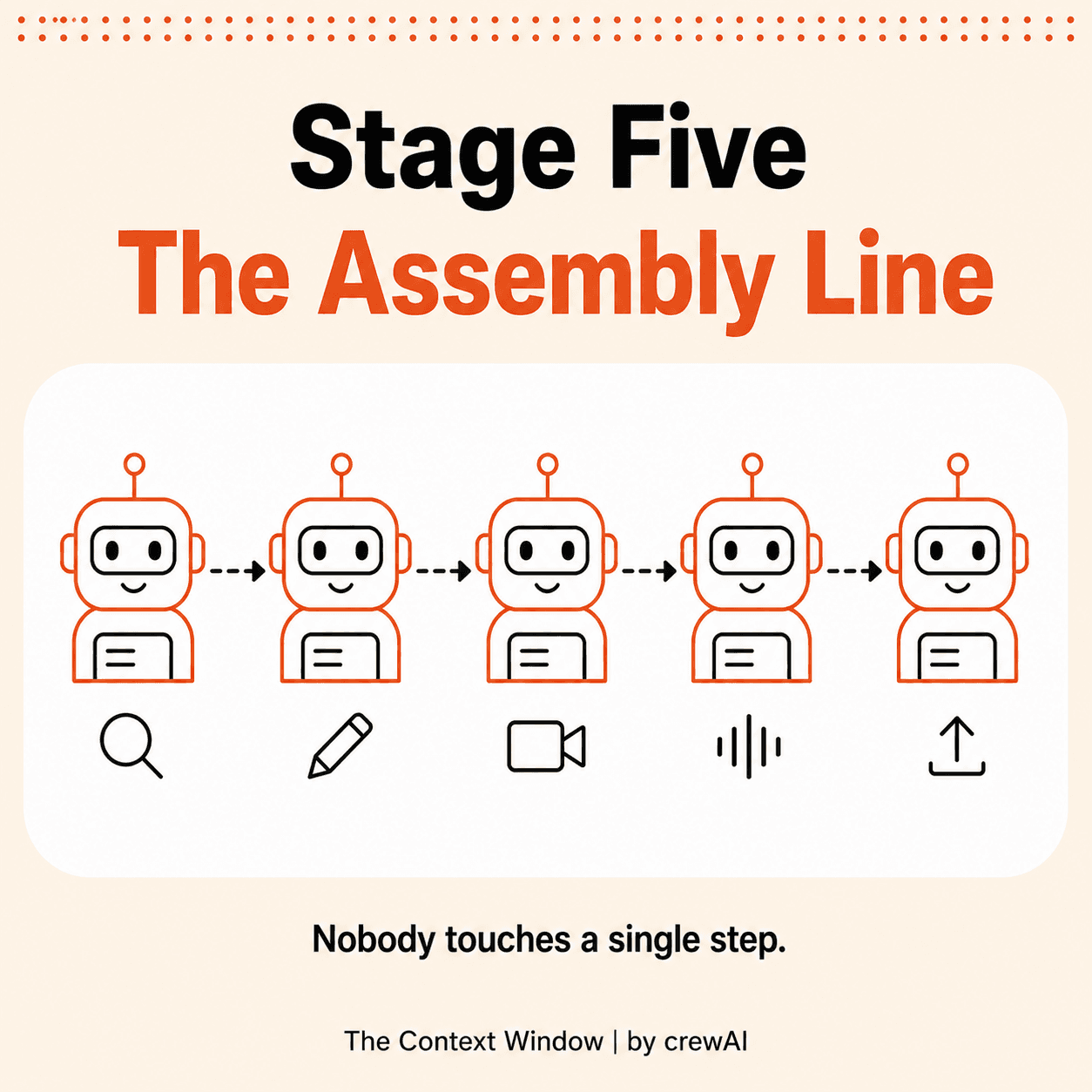
Stage Five: The Conductor
Fixing the vendor mess was one bottleneck. But that was never the only thing eating her week. In this level, ahead of every drop, instead of briefing and paying a marketing agency for weeks and waiting for five concepts back, a chain of agents does the whole job unattended.
One researches what customers are actually complaining about online.
A second writes ad scripts from those real complaints.
A third turns them into UGC-style video.
A fourth cleans up the audio and adds captions.
A fifth uploads the finished ads straight to Meta.
Nobody touches a single step, and dozens of ad variants come out the other end. The complexity here is in how many steps got chained together without Steph being the one connecting them. Marketing-tech builder Cody Schneider has described close to this exact pipeline publicly:
Scraping Reddit for real customer pain points
Writing scripts off them
Generating video
Stripping dead air, adding captions
And uploading straight to Facebook, built once and reused for every new product.
The question to ask about your own setup: if a human (you) or an agency is still the one manually passing work between steps, you're not here. This stage only counts once the agents are handing off to each other.
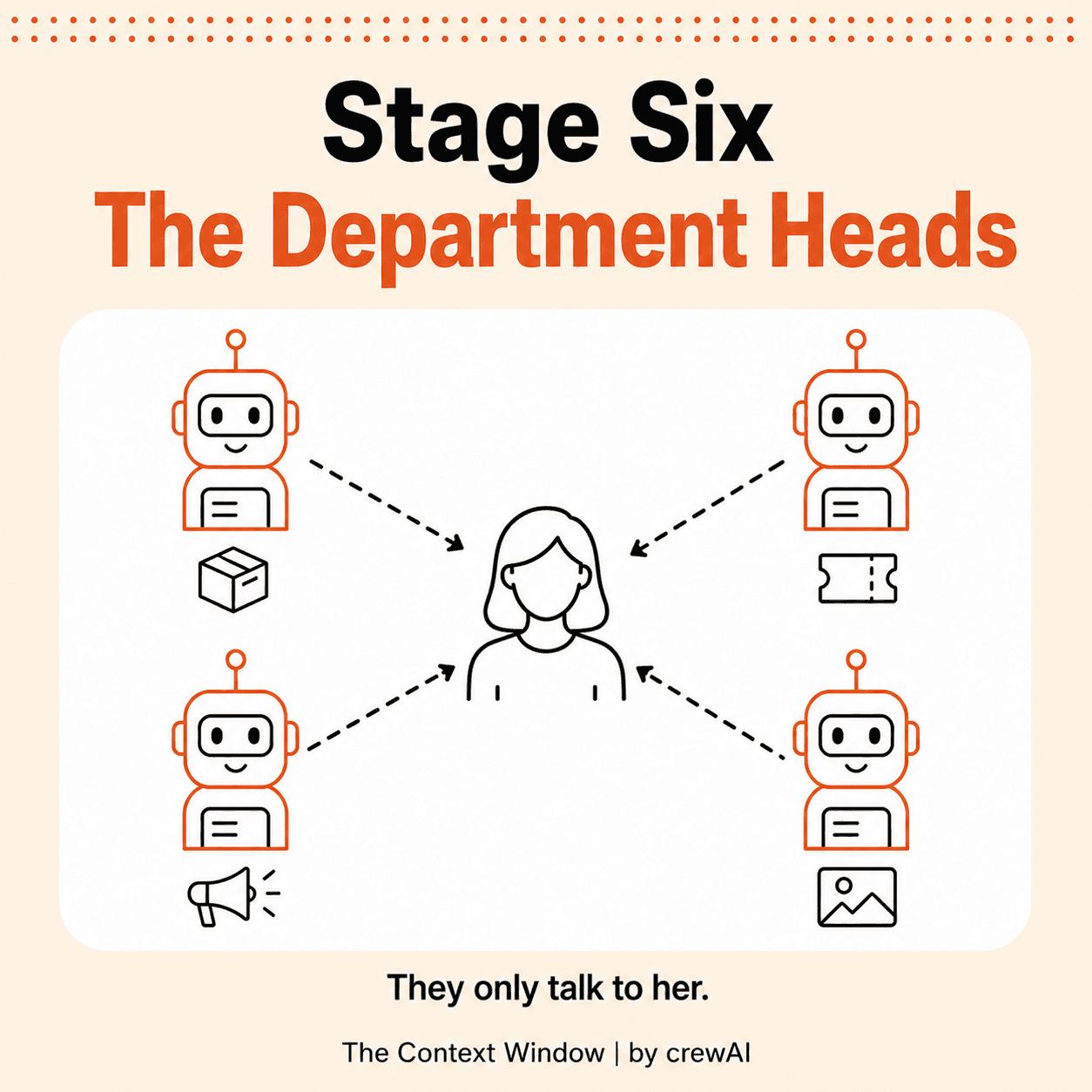
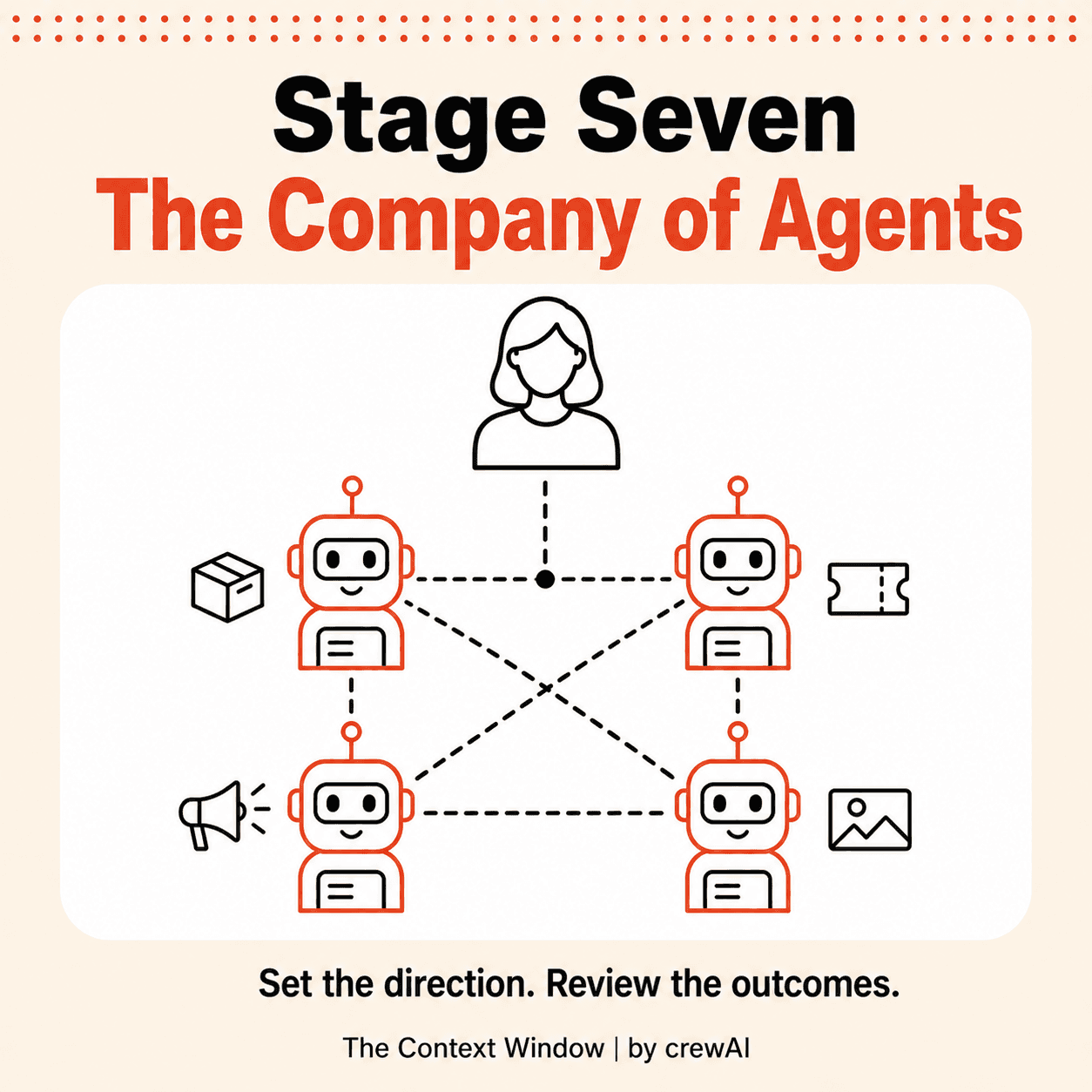
Stage Six: The Ringmaster
At this stage, it's not one system anymore. It's several running at once. From inventory recommending reorders, and support triaging tickets to one scouting ambassadors, and one generating ad creative. The old way of thinking about this said if she'd built enough of these, she'd effectively hired a department head for every function without hiring anyone. That's true, but there’s much more. Eventually, these systems stop reporting only to Steph and start talking to each other. A support ticket spike and a shipping delay used to be two separate alerts she herself would have to notice were connected. Now they get correlated automatically, and all she has to do is review that one decision. Her actual job stops being "triage five channels" and becomes "set the direction, review the outcomes, change the rules when something's off." The clearest real example of this is Siloh Moses, founder of a company called Uno OS, who has publicly documented running his business with effectively zero human employees and a full org chart built entirely of agents, covering functions a roughly $1.2 million team used to handle. He's currently running a public challenge to hit $1 million in nine months, solo, already well into it with no paid ads. The real test was never how many agents you're running. It's whether they're catching what you'd otherwise have to connect in your own head. Steph still reviews the outcomes and calls the changes herself, one decision instead of five, but it's still her making the call.
Stage Seven: The Voice Memo CEO
Even at stage six, Steph is still the one deciding. Which agent to add, which to kill, when something's not worth running anymore, that judgment still lives with her. Stage seven is what happens when that judgment gets delegated too. Picture Steph's morning now. She wakes up and talks for thirty minutes into a voice app, half status update, half thinking out loud. That's it. That's her whole input for the day. A chief of staff agent takes it from there. It looks at everything running in parallel, reports back on what the data actually says, kills the agents that aren't earning their keep, spins up new ones where there's a gap. It understands cost and tradeoffs well enough to know when an agent is worth keeping on and when it isn't, and it feeds that judgment back to every agent underneath it. Steph isn't managing four systems or forty. She's managing one, and that one manages the rest. No one really is fully running a company this way yet. This stage is closer to a direction the best builders are heading in. Worth naming honestly, since the rest of this ladder was built on people who'd already climbed each rung, and this one is the one many operators are moving towards. That's also, in a way, the most useful thing about it. If stage six is the ceiling most people mistake for the top, stage seven is the reminder that the ceiling keeps moving.
This week’s treats
One great long-form read -
The Gervais Principle: The Office as a taxonomy of Sociopaths, Clueless, and Losers in corporate hierarchy.
Two tweets worth checking out:
Finally found a use case for an Apple Vision Pro… made my AI Agent return to office 😂
34 Side Quests
Three songs you should add to your work playlist
Marconi Union – Weightless
Ólafur Arnalds – Saman
Nils Frahm – Says
Signal vs Slop Matrix
Every week we plot what happened in AI on two axes. Slop ↔ Signal: was there actual substance, or was it noise? Now ↔ Later: is this something you should act on this quarter, or a signal about where things are headed in 1-3 years? Let's see what happened this week.
Oracle borrows billions for AI, and it can't stop the cash bleeding Oracle's debt hit $108 billion, up from $92.6 billion in May, after burning $10.3 billion in free cash flow over six months to fund AI data centers for Meta, Nvidia, and OpenAI.
Character.AI settles teen-suicide lawsuits as Congress moves on age checks Character.AI and Google agreed to settle five cases across Florida, Colorado, New York, and Texas, even as the bipartisan GUARD Act, which would ban AI companions for minors, keeps picking up Senate cosponsors.
A casino's facial-recognition AI has now wrongly flagged 168 people for arrest A Reno casino's AI identified UPS driver Jason Killinger as a 99.9% facial match to a banned gambler and had him detained for 11 hours, and he's now suing to unmask 168 other people the same system has wrongly flagged. NOW / SLOP
Timbaland signed a pop star that isn't human Tata Taktumi, built on Suno and marketed as a "living, learning, autonomous music artist," is the debut act of Timbaland's new label Stage Zero and his self-declared genre "A-Pop."
Robots just got their own fighting league China's URKL (Ultimate Robot Knock-out Legend) launched in February with Thai boxing champion Buakaw Banchamek at the podium and a 10-kilogram pure gold championship belt worth roughly RMB 10 million on the line.
A humanoid robot just broke Usain Bolt's 100m world record At Beijing's second World Humanoid Robot Games, a robot named Lightning ran the 100 meters in 9.32 seconds, beating Bolt's 9.58-second human record, as 2,056 robots from 666 teams and 16 countries competed across 30-plus events. LATER / SIGNAL
Bill Gates says the world has no plan for the AI transition In his latest "Year Ahead" letter, Gates writes that AI will let us "make far more goods and services with less labor," while elsewhere insisting humans will still "reserve some things for ourselves."
A new startup is teaching AI physics instead of words Fei-Fei Li's World Labs released Marble, part of a wave of "world models" that learn from video and simulation instead of text, with Yann LeCun predicting they'll replace LLM-style architectures within three to five years.
FBI warns deepfake voices are impersonating officials The Bureau's advisory says AI-cloned voices of senior US officials are being used to build trust before phishing victims, building on a prior warning of a 442% surge in AI voice-cloning attacks and an estimated $5 billion in US losses. LATER / SLOP
AI can now guess your vaccine reaction before the shot Researchers at La Jolla Institute, UC San Diego, and the University of Georgia built a model that uses pre-vaccination antibody levels across multiple flu strains to predict who'll mount a weak or strong response, hitting 73% accuracy where single-strain models failed. 10.AI-guided diabetes program: patients slashed their meds, kept blood sugar in check Twin Health's one-year "digital twin" study of 1,853 patients cut average diabetes medications from 1.9 to 0.5 per person, with 89% reaching HbA1c below 7% Until we meet again Sumeru Crew AI